
Guide
Is Your Corona Garage Door Worth Fixing, or Worth Replacing
Corona homes run from 1938 to 2007, median build 1981. Here's how that housing age and the local climate decide if your door is worth repairing or replacing.
Local detail
The Problem
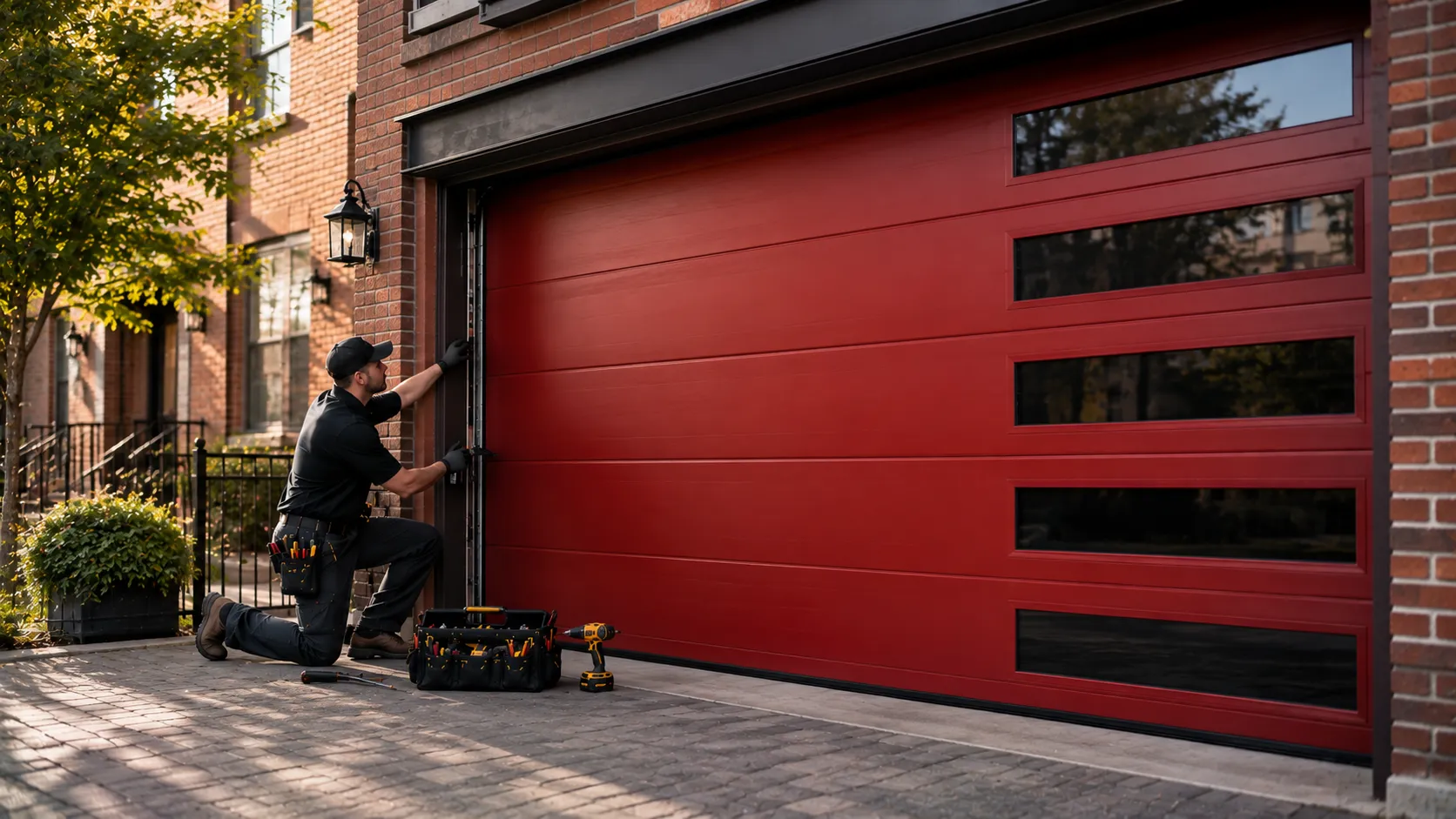
Corona's housing stock spans 1938 to 2007, but the median build year lands at 1981, and most of the named areas around here - the 30 tracts that make up this service area - carry mostly 1980s and 90s construction. That matters because a door installed when a house was built is often still the door on the house now. A torsion spring, a set of rollers, an opener motor from that era wasn't built to run forever, and after four decades most of what's on the track has outlived its rated cycle count more than once.
The question we get isn't usually "is my door broken" - it's obvious when a cable snaps or a panel won't lift. The harder question is whether to sink money into a door that old or start over. A door from a 1980s build might have a perfectly sound frame and just need a spring and rollers. A door from the same era might also have a track bent past straightening, a steel panel rusted through at the bottom corner, or an opener whose replacement parts stopped being made years back. Age alone doesn't answer it. What's actually failing does.

The area
What You Pay
We don't quote a number here without seeing the door, and we're not going to pretend every job costs the same - a spring swap on a standard double door and a full replacement with a new opener are not close to the same job. What we can tell you is what drives the decision on an older Corona door specifically.
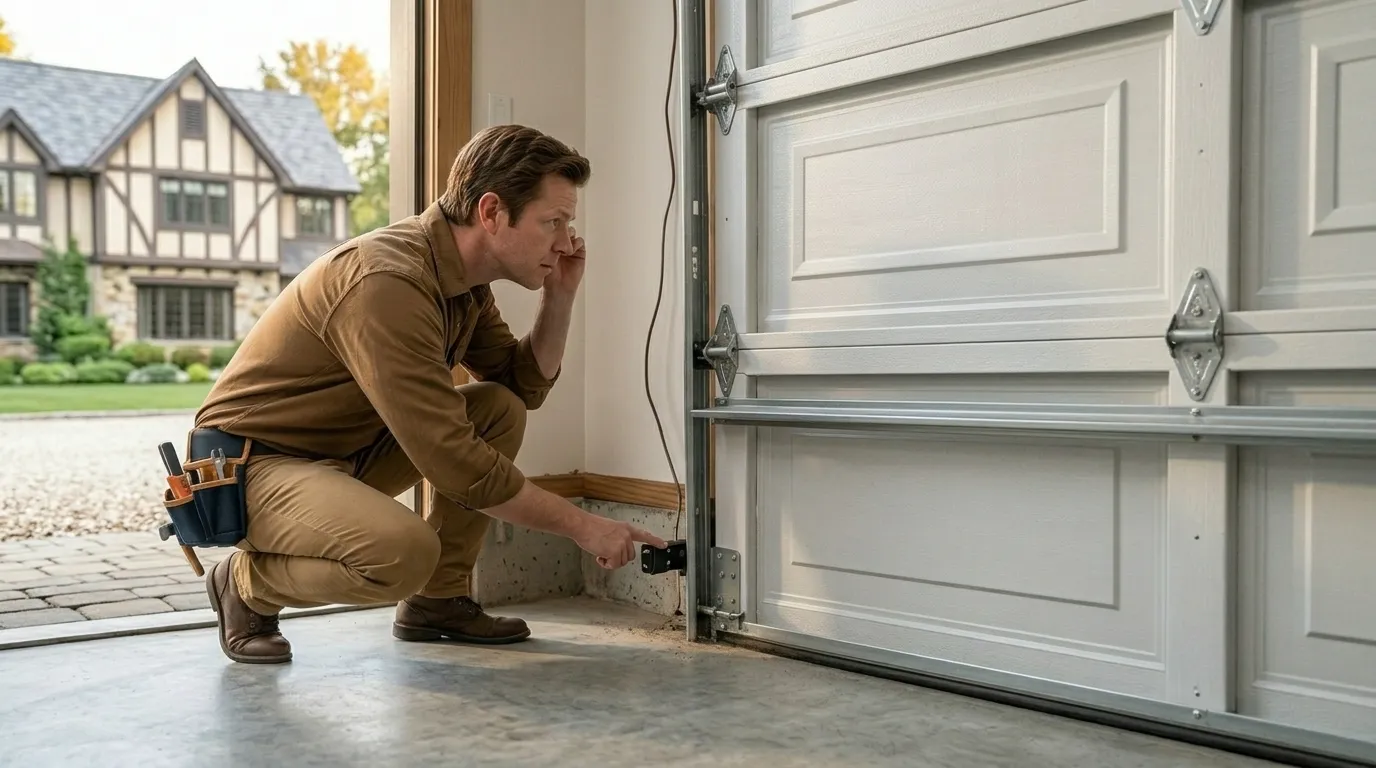
If the springs, rollers, and cables are worn but the track and panels are straight, that's a repair, and usually a cheap one relative to replacement. If the panels are dented, rusted, or the door is a builder-grade steel model from a 1980s tract build with hardware nobody stocks anymore, you start pricing a repair against a new door and the math often favors new - especially once you add up a service call, a special-order part, and the labor to fit an obsolete bracket.
Median household income across this area runs $108,588, which is worth mentioning only because it sets a real ceiling on what most owners here are willing to put into an old door before they'd rather just replace it. That's a household decision, not a universal rule, but it's the one we see most often.
What we find
What Local Conditions Do
This area sits in a HEAT-moderate climate band, which is easier on garage doors than a lot of the country deals with - no deep freeze-thaw cycle cracking a slab or seizing a track. That's the good news for an older door here: the metal and hardware age slower than they would somewhere with hard winters.
What heat does instead is dry out and stiffen anything rubber or nylon - weatherstripping, roller bushings, the seal along the bottom panel. On a door from the 1981 median build year, that's 40-plus years of thermal cycling on original seals and hardware, even if the springs and cables were replaced somewhere along the way. A door that looks structurally fine can still leak air and light at the bottom edge because the seal gave out long before the panels did.
This is also why we look at the whole door, not just the part that failed. On an older Corona door, a broken spring is often the visible symptom of a hardware set that's uniformly tired, not an isolated failure.
How we work
When to Get Help
Call before you touch a spring yourself - torsion springs are under real tension and that's not a place to save money by guessing. Beyond that, a few signs tell us a door is worth fixing rather than replacing: the track is straight, the panels aren't rusted through, and the opener runs but is noisy or slow. Those are repair jobs.
Signs it's not worth fixing: the door is original to a house built in the 1938-2007 range and has never had hardware replaced, the panels are visibly bowed or rusted at the seams, or you're being told a part has to be special-ordered because nobody local stocks it anymore. At that point you're paying repair labor plus a wait for a part to keep an old door limping along, and a new door with current hardware usually costs less over the next few years than that combination.
One honest limit: we don't try to match a discontinued panel style. If your door is old enough that the exact panel isn't made anymore, we'll tell you that up front rather than hunting for a part that doesn't exist.
Questions
Common questions
How old does a garage door have to be before replacing beats repairing?
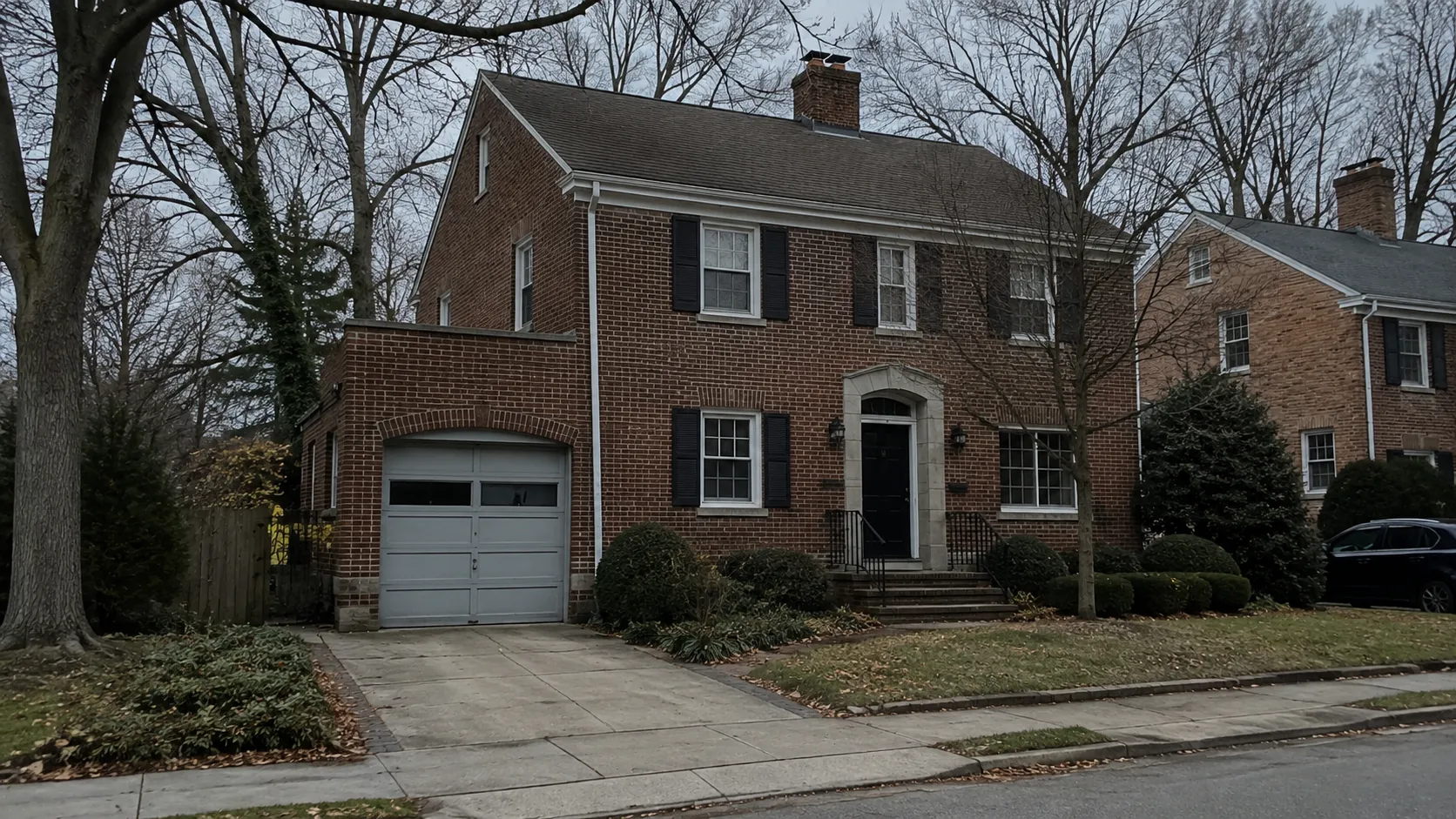
There's no fixed age - it depends on what's actually worn. But if your house falls in Corona's 1938-2007 building range and the door is original, with rusted panels or hardware nobody stocks, replacement usually costs less over time than chasing repairs on an obsolete design.
Does Corona's climate wear out garage doors faster?
This area sits in a HEAT-moderate band, which is gentler on doors than freeze-thaw climates. The main wear here is heat drying out rubber seals and nylon rollers over decades, not metal fatigue from cold. Springs and cables usually fail from age and cycles, not weather.
Is it worth fixing a garage door on a house built in the 1980s?
Often yes. A lot of Corona's housing stock, including many of the named areas nearby, dates to the 1980s and 90s. If the track and panels are straight, a spring or roller repair on a door that age is usually cheaper than replacement - the frame just needs updated hardware.
Ready when you are
Need a garage door sorted in Corona?
Corona Garage Door Pros repairs and installs garage doors, springs and openers in Corona, CA and the surrounding area.