
Guide
What a Service Call Actually Covers in Corona
A plain look at what a garage door service call actually checks in Corona, tied to the 1938-2007 housing stock and the heat this valley sees each summer.
Local detail
The Problem
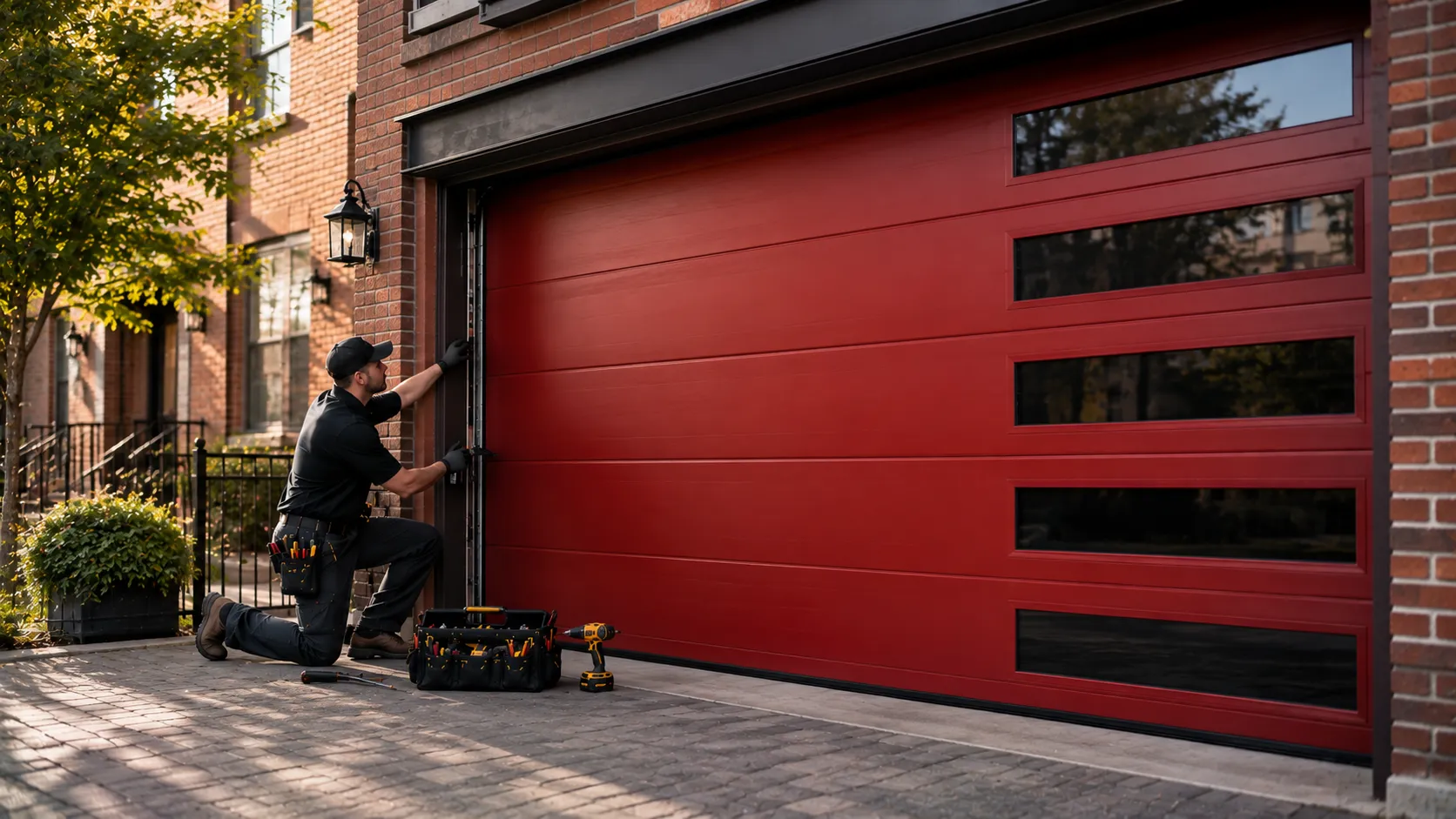
Most of the calls we get in Corona aren't mystery problems. They're the predictable result of a door and opener that have been doing their job since somewhere between 1938 and 2007, with the bulk of the stock here dating to the 1980s and 90s. A torsion spring rated for a certain number of cycles doesn't know what decade it is - it just wears out, and a lot of Corona's doors are hitting that point at the same time because they went in around the same time.
Add to that the rollers, hinges, and cables that came with the original build, and you've got a door that's been quietly degrading for twenty or thirty years before anyone notices the noise or the slow drift when it opens. We see this across the older tracts and in newer pockets alike, since even 2000s-era stock is now old enough for its first spring failure. A service call exists to catch that before it becomes a door that won't open at all, or worse, a spring that lets go while someone's underneath it.
The area
What You Pay
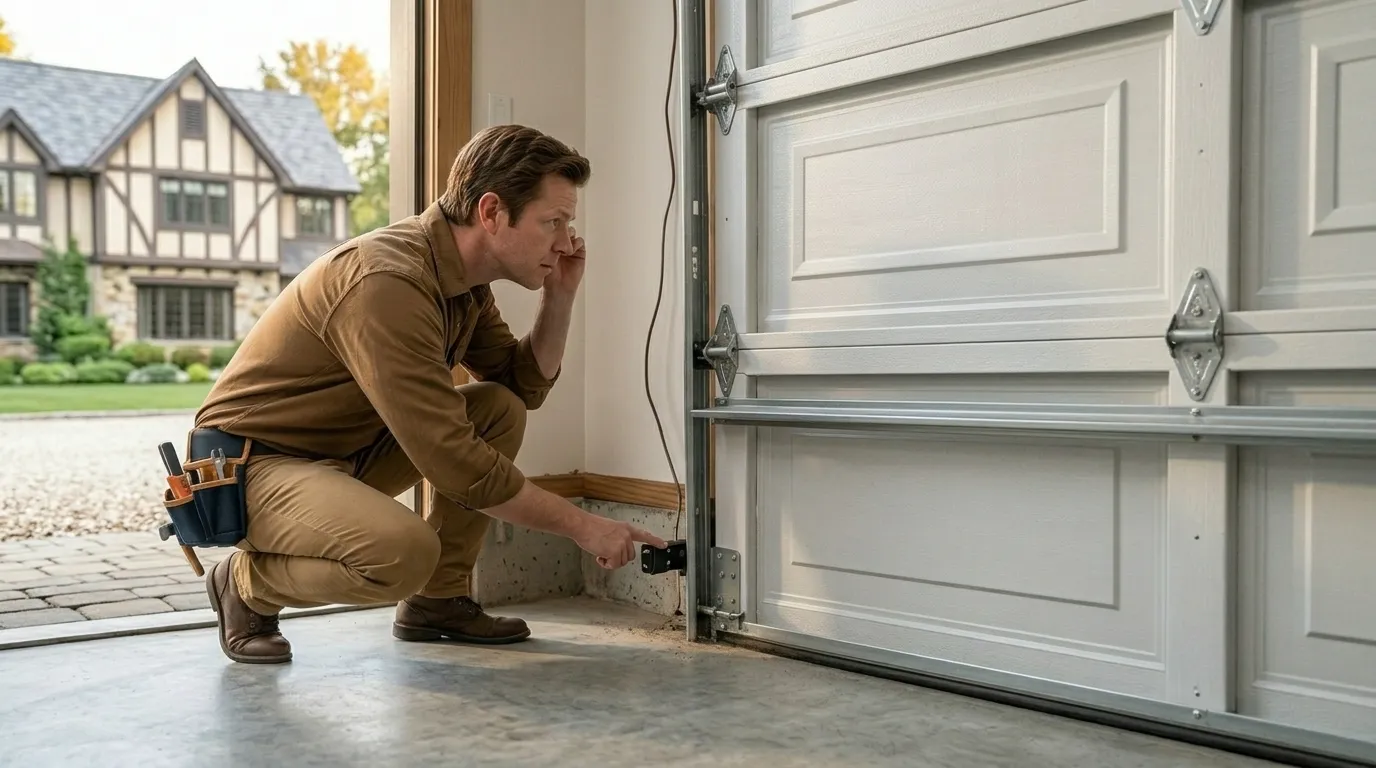
We don't have a set number to hand you here - every door is different, and quoting a flat figure without seeing the hardware would be a guess dressed up as a fact. What we can tell you is what actually drives the cost of a call: whether the spring, cable, or opener is original to a house built decades ago (parts availability changes with age), whether the track is bent versus just misaligned, and whether the fix is a repair or whether the door's age means replacement makes more sense.
On a lot of Corona's 1980s and 90s stock, we're replacing hardware that's simply reached the end of its rated life rather than fixing a break. We'll always tell you which situation you're in before we start work, not after.
What we find
What Local Conditions Do
Corona sits in a moderate heat climate band, and that matters more for garage doors than people expect. Steady heat cycles metal springs and expands and contracts steel panels and tracks day after day, year after year - it's slower than a hard freeze-thaw cycle but it adds up over a 20-, 30-, or 40-year-old door the same way. Lubricant dries out faster, nylon rollers get brittle sooner, and opener drive belts and chains stretch.
None of that is dramatic on any single day, which is exactly why it goes unnoticed until a spring finally snaps or a panel starts to sag. Across the roughly 141,485 owner-occupied houses in this service area, the doors installed with the original 1980s-90s build are the ones most likely to be feeling that cumulative heat load right now, whether the owner is in central Corona or out toward El Cerrito or Norco.
How we work
When to Get Help
Call before the door fails completely, not after. If a door built in the 80s or 90s is starting to sag on one side, if the opener strains and reverses on its own, or if you hear a spring make a popping sound, that's the window where a repair is still a repair. Once a cable snaps under load or a torsion spring lets go entirely, you're often looking at a bent track or a damaged panel too, which pushes the job toward replacement instead of repair.
One limitation worth being honest about: if your door and opener are both original to a house from the earlier end of that 1938-2007 range, some parts simply aren't made anymore, and matching them can take longer than a same-week fix. We'll tell you straight if that's the situation instead of promising a part we can't get.
Questions
Common questions
Is a service call the same as a repair?
Not always. A service call is us coming out to look at the door, tell you what's actually wrong, and give you the options. Sometimes that ends in a repair on the spot, sometimes it's a bigger job needing parts we don't carry on the truck, especially on older original hardware.
Why does my 1990s door need more work than a newer one?
Springs, rollers, and cables have a rated cycle life, and a lot of Corona's housing dates to the 1980s and 90s. That hardware has simply been cycling longer, and the steady heat here speeds up wear on lubricant and metal parts over that many years.
Do you serve areas outside Corona itself?
We cover the surrounding service area, including places like El Cerrito, Norco, and Eastvale nearby. If you're unsure whether your address falls in range, give us a call and we'll tell you directly.
Can every broken spring be repaired instead of replaced?
No. If a spring snaps under load it can bend the track or damage a panel on its way down, and at that point repair isn't really an option anymore - replacement is the honest answer, and we'll say so rather than patch something that won't hold.
Ready when you are
Need a garage door sorted in Corona?
Corona Garage Door Pros repairs and installs garage doors, springs and openers in Corona, CA and the surrounding area.