
Guide
What That Noise Coming From Your Garage Door Actually Means
Grinding, popping, or banging garage door in Corona? Here's what each noise means for homes built 1938-2007, and when a sound is a $20 fix or a real problem.
Local detail
The Problem
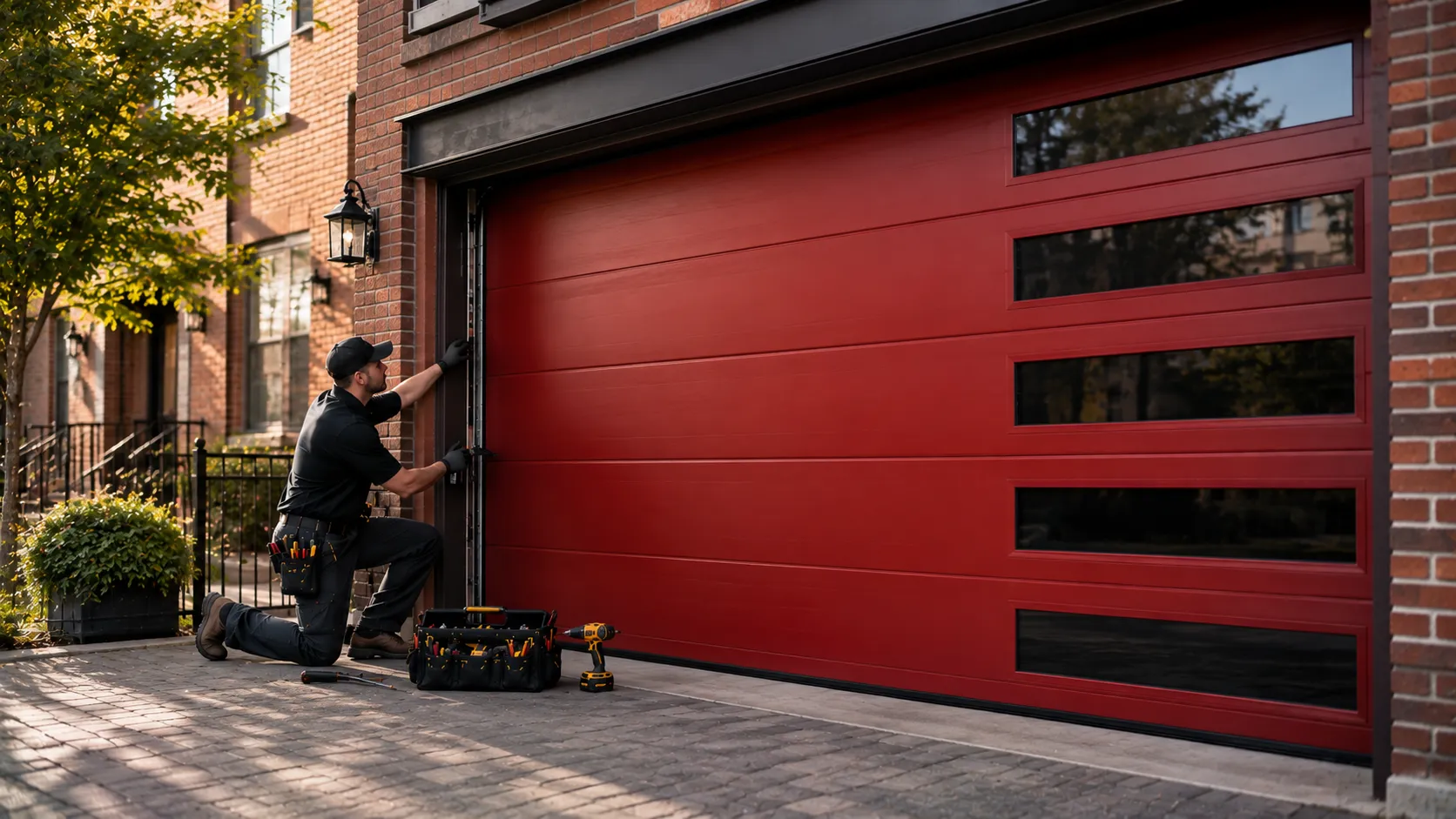
A garage door doesn't fail quietly. It complains first. In Corona, most houses went up between 1938 and 2007, with the median landing around 1981 - which means a lot of doors and openers on the road right now are original or close to it, running on hardware that was builder-grade when it went in.
That matters because different ages fail differently. A door from the early tract-building years groans from dry rollers and worn hinges. A door from the 90s wave usually still has its factory springs, and factory springs have a cycle life that's now closer to done than not.
The noise is the door telling you which stage it's in. Owners tend to lump every sound into
The area
What You Pay
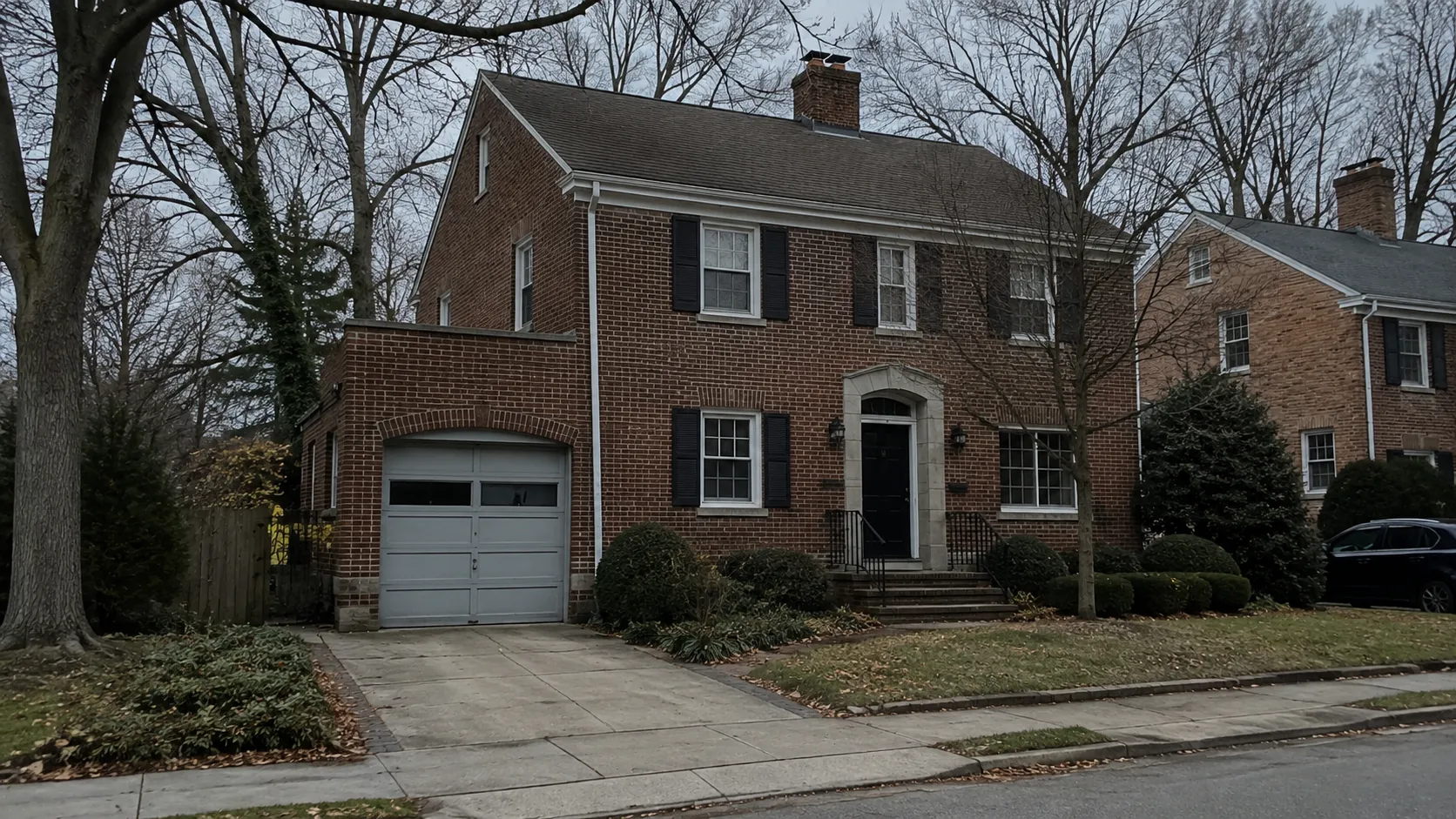
We're not going to put a number here that doesn't hold up once someone's actual door is in front of us - spring count, door weight, and opener type change the job too much for a flat figure to mean anything, and we don't have a published price list to point to. What we can tell you: a noise that turns out to be a dry roller or a loose hinge bolt is a small, fast fix. A noise that turns out to be a failing torsion spring on a door built when Corona's housing stock was still going up in the 80s and 90s is a bigger job, because the spring, the cable, and sometimes the drum all need attention at once.
The honest limitation here is that we can't price a sound over the phone - we can tell you what it usually means, and what it usually doesn't, but the real number comes from someone standing at your door. If a shop quotes you a firm price before seeing the door, that's worth a second call.
What we find
What Local Conditions Do
Corona sits in a moderate-heat climate band, and that matters more for garage doors than people expect. A door that sits closed all day heats up on the inside face, cools fast once the sun drops, and does that cycle most days of the year. Metal expands and contracts with it - track brackets loosen a fraction at a time, and grease that was fine in spring turns gummy or thin by late summer.
That's why a door that was silent in March starts squeaking or banging in July. It's not a new problem, it's the same hardware responding to the same daily heat swing it's been through for years, finally past the point of forgiving it. Wood-composite panels on older doors, common in the 1980s-90s stock across this area's named neighborhoods, also flex with heat, which shows up as a soft popping sound at the top corners rather than anything mechanical.
None of this is dramatic. It's slow wear, sped up by the same heat cycle every house in the area sits through.
How we work
When to Get Help
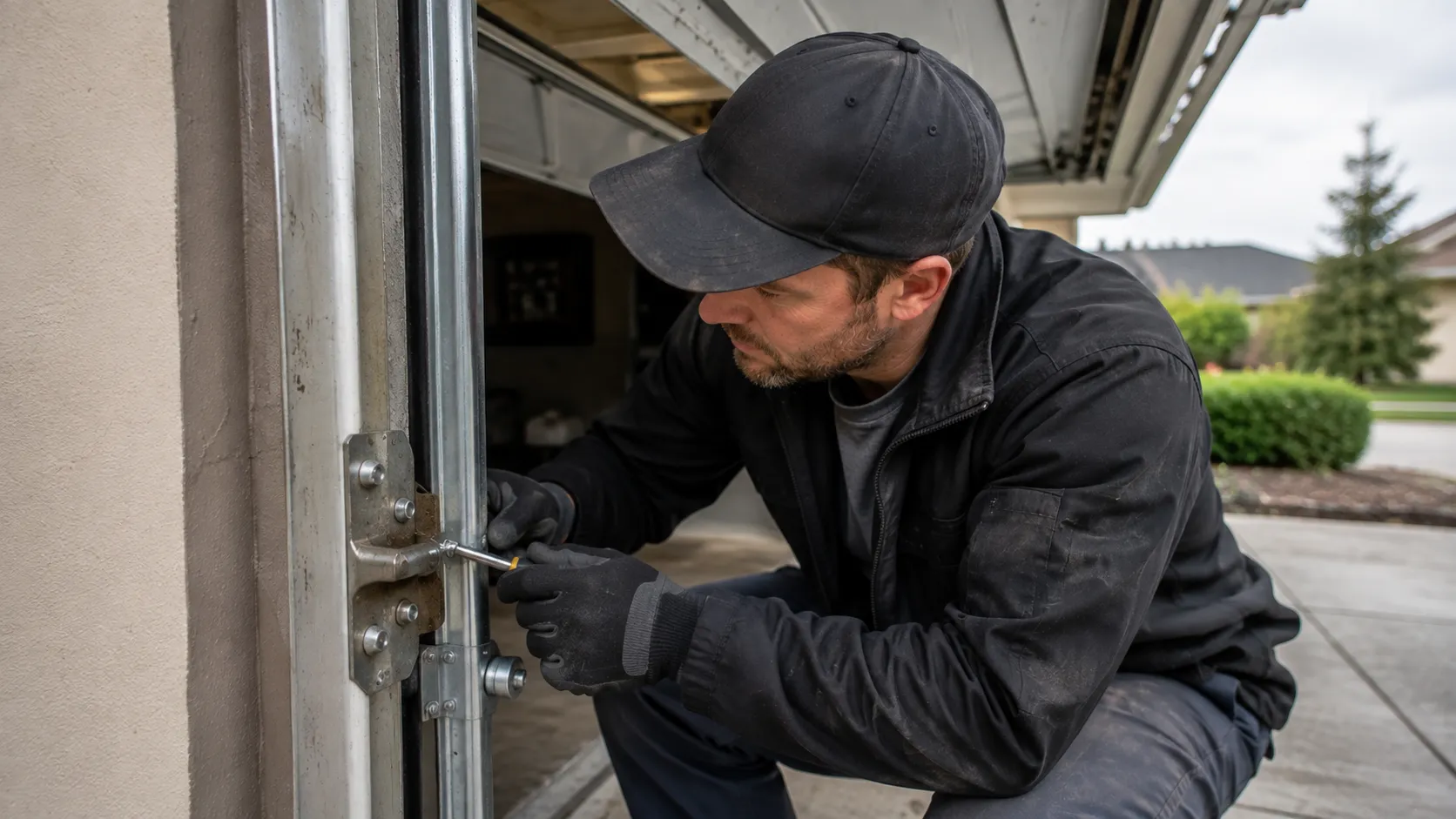
A rattle you can set your watch to isn't urgent. A grinding sound, a loud bang on the way up, or a door that jerks and stalls partway is. Grinding usually means a roller has seized or a bearing at the end of the torsion spring is going. A bang followed by the door refusing to move is very often a broken spring - don't try to lift the door manually past that point, the cable can still be under load.
With 141,485 owner-occupied houses across our service area, a bad noise in one house is rarely a one-off; we hear the same handful of sounds on repeat depending on which decade the neighborhood was built. Our coverage runs from El Cerrito three miles out to Norco, El Sobrante, and Eastvale, out to farther spots like Chino Hills and Lake Elsinore. If the noise is new, loud, and paired with the door moving unevenly, that's the call to make sooner rather than later - a stuck cable or a snapped spring left alone can take the opener with it.
Questions
Common questions
My garage door makes a loud bang once in a while, is that normal?
A single loud bang, especially followed by the door refusing to lift, is often a torsion spring breaking. It's not something to keep operating through - the spring carries most of the door's weight, and without it the opener or the cables take strain they're not built for. Get it looked at before using the door again.
Why does my door only squeak in summer?
Heat cycling is the usual cause. Corona's moderate-heat band means the door heats and cools daily, which thins out lubricant and lets hardware loosen slightly. It's common on doors from the area's 1980s-90s building wave, and usually a quick fix rather than a sign of failure.
Is a grinding noise worse than a squeak?
Generally yes. Squeaking is often just dry rollers or hinges. Grinding usually points to a bearing or roller that's seized or metal-on-metal contact somewhere in the track. It won't fix itself and tends to get louder and more expensive the longer it runs.
Ready when you are
Need a garage door sorted in Corona?
Corona Garage Door Pros repairs and installs garage doors, springs and openers in Corona, CA and the surrounding area.