
Guide
Why So Many Corona Garage Doors Have No Insulation
Corona homes built 1938-2007 (median 1981) often lack insulated doors. See what that means for repair, replacement, and cost in this heat-moderate climate.
Local detail
The Problem
Most houses in the areas we cover went up between 1938 and 2007, with the typical build year landing around 1981. A door installed anywhere near that median date predates the insulation standards that are common on doors sold today. What that means on the ground: a single layer of steel or a slab of wood, no foam core, no thermal break at the seams.
Across the roughly 30 named communities in this service area, the bulk of the stock dates to the 1980s and 90s, so it's not a handful of older homes we're talking about - it's the majority of garages on a given street. These doors weren't built wrong. They were built to the rules and materials of their time, before insulated doors were the default rather than the upgrade.
The panels are often thinner steel too, which shows up as denting and oil-canning years before the hardware itself gives out. None of this means the door is broken. It means the door was never designed to do the job homeowners now expect of it - keeping a garage closer to the temperature of the house instead of the temperature outside.
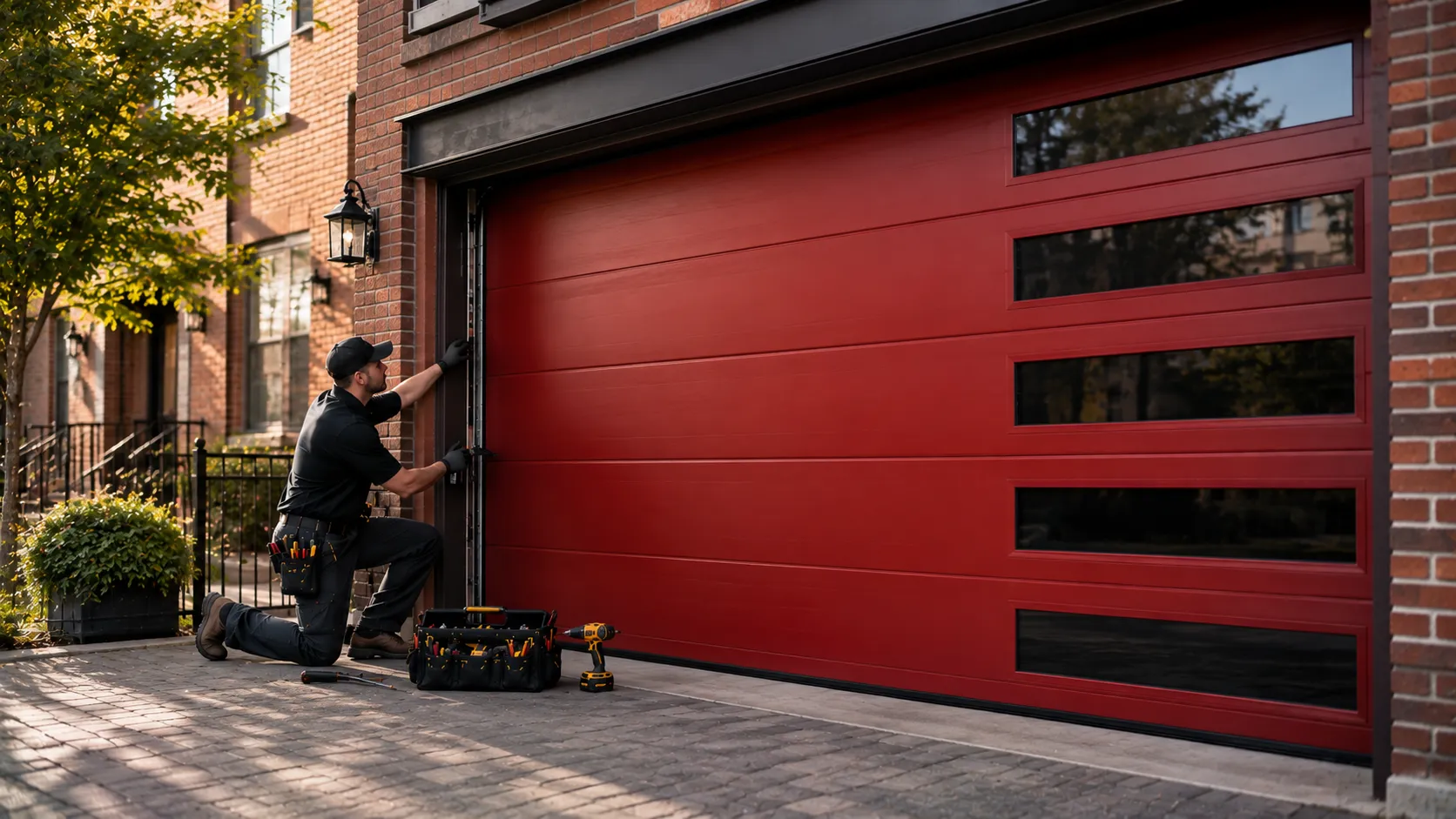

The area
What You Pay
We don't have a flat number to hand you here, and we're not going to make one up. What we can tell you is what drives the cost on a house like the ones common around here: whether you're patching a single warped panel on an original 1980s-era door or swapping the whole section for an insulated replacement, whether the track and hardware are original or already replaced once, and whether the opener is original to the door or a later add-on that doesn't match the current panel weight. At a median household income of $108,588, most owners here are weighing a repair against a full replacement rather than treating either as an easy expense, and that's a reasonable way to think about it.
A repair on an old, uninsulated door buys you time. A replacement buys you a door built to a different standard than the one your garage started with. Which one makes sense depends on the door's age and condition, not on a general price list - we'll look at the actual door before we say either way.
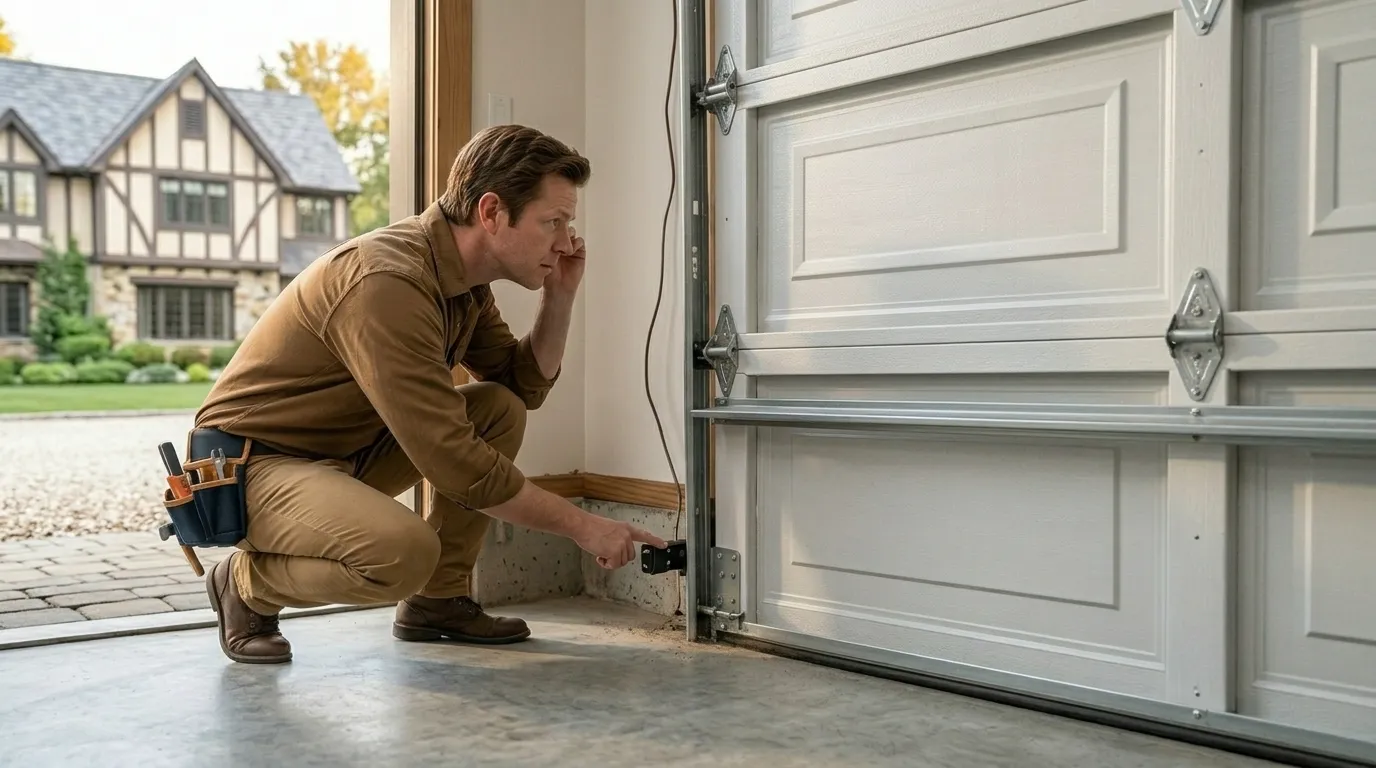
What we find
What Local Conditions Do
This is a moderate-heat climate, not a freeze zone, so the failure mode is warped panels and worn seals, not cracked concrete from frost heave. An uninsulated steel door takes the sun's heat straight through to whatever's stored in the garage, and repeated heat cycling is what causes the panel warping and seam gapping we see on original doors from the 1980s and 90s. With 141,485 owner-occupied houses out of 267,102 households in this area, a lot of these original doors are still hanging on their first set of hardware, and heat cycling over decades is hard on springs and rollers even when nothing looks obviously wrong from the driveway.
The rollers dry out, the track shifts slightly out of plumb as the door has expanded and contracted thousands of times, and the spring tension that was right for the door's weight when it was installed can drift as the door itself sags slightly with age. None of this is dramatic. It's slow wear from a house doing exactly what houses in this climate do.
How we work
When to Get Help
Call before the door fails outright, not after. Warning signs on a door this old: a panel that's visibly bowed or oil-canned, a gap along the bottom seal that wasn't there a year ago, a door that's noticeably heavier to lift by hand than it used to be, or an opener that strains and reverses partway through the cycle. Any one of those points to spring tension or track alignment drifting off from age, which is common on original hardware from houses built in the 1938-2007 range that make up most of this area's stock.
One honest limitation: if the door frame itself has racked or shifted because the house has settled, a new door or new springs won't fix that - that's a structural issue outside what a door replacement solves, and we'll tell you if that's what we're looking at instead of selling you a door you don't need yet. Past that point, the call is worth making before a cable snaps or a spring lets go under tension.
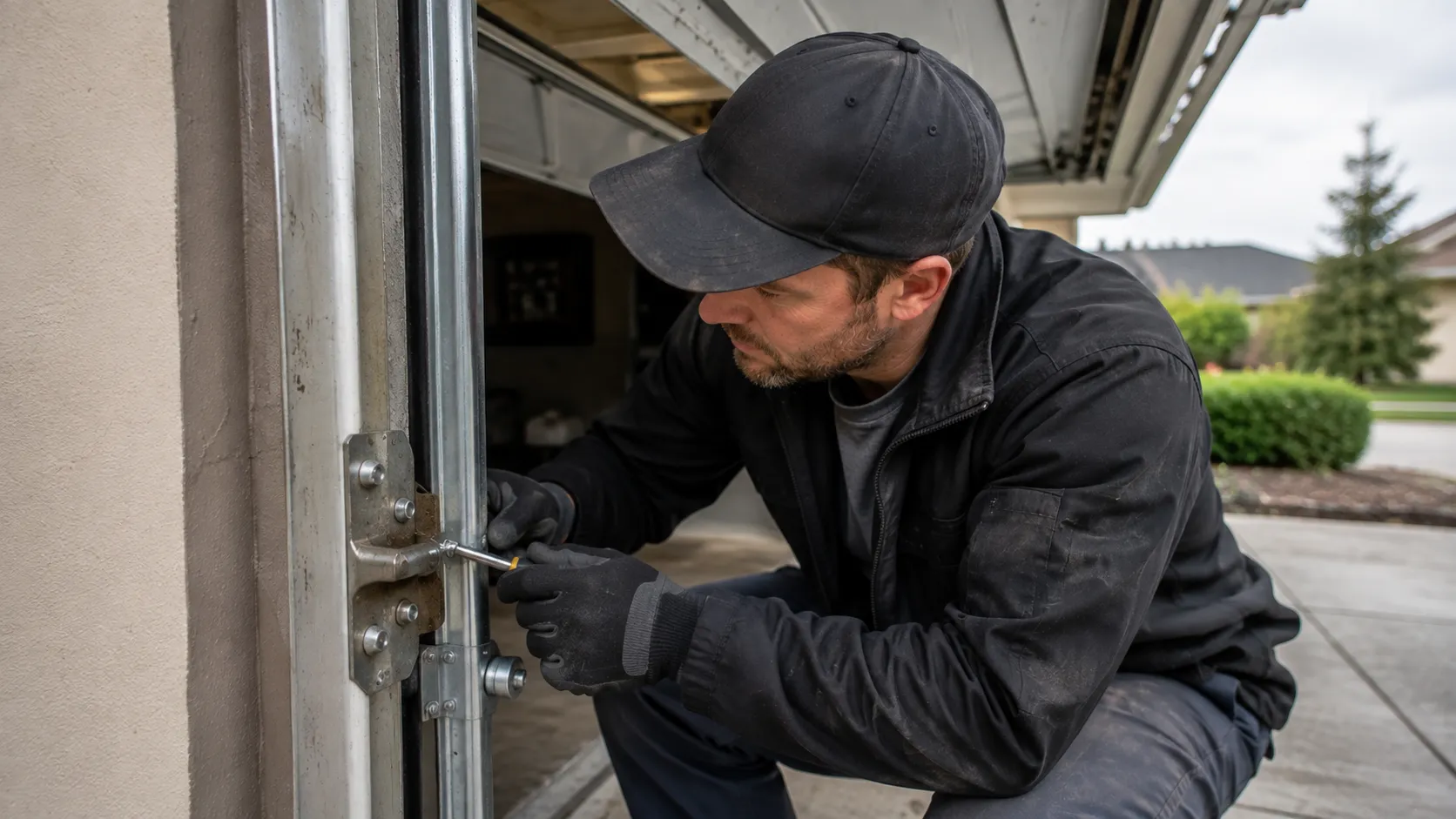
Questions
Common questions
Is my garage door too old to be worth repairing?
Not necessarily. Age alone doesn't decide it - condition does. A lot of doors from the 1980s and 90s that make up most of this area's housing stock are still structurally sound even without insulation. We look at the panel condition, track alignment, and hardware wear before saying repair or replace.
Does an uninsulated door actually matter in this climate?
This is a moderate-heat climate rather than a freeze zone, so the issue isn't pipes bursting - it's heat passing straight through the door into the garage and whatever's stored there, plus the panel warping that comes from years of heat cycling on original steel.
Will a new insulated door lower what I pay to cool the garage?
An insulated door slows heat transfer more than a single-layer steel or wood panel does, which is the main gap on doors from this area's typical 1938-2007 building era. We can't give you a specific savings figure without knowing your garage and door setup.
How do I know if it's the spring or the opener?
If the door feels heavy when you lift it by hand with the opener disconnected, that points to the spring. If it lifts fine by hand but the opener strains or reverses, the problem is more likely the opener or track alignment, not the spring itself.
Ready when you are
Need a garage door sorted in Corona?
Corona Garage Door Pros repairs and installs garage doors, springs and openers in Corona, CA and the surrounding area.