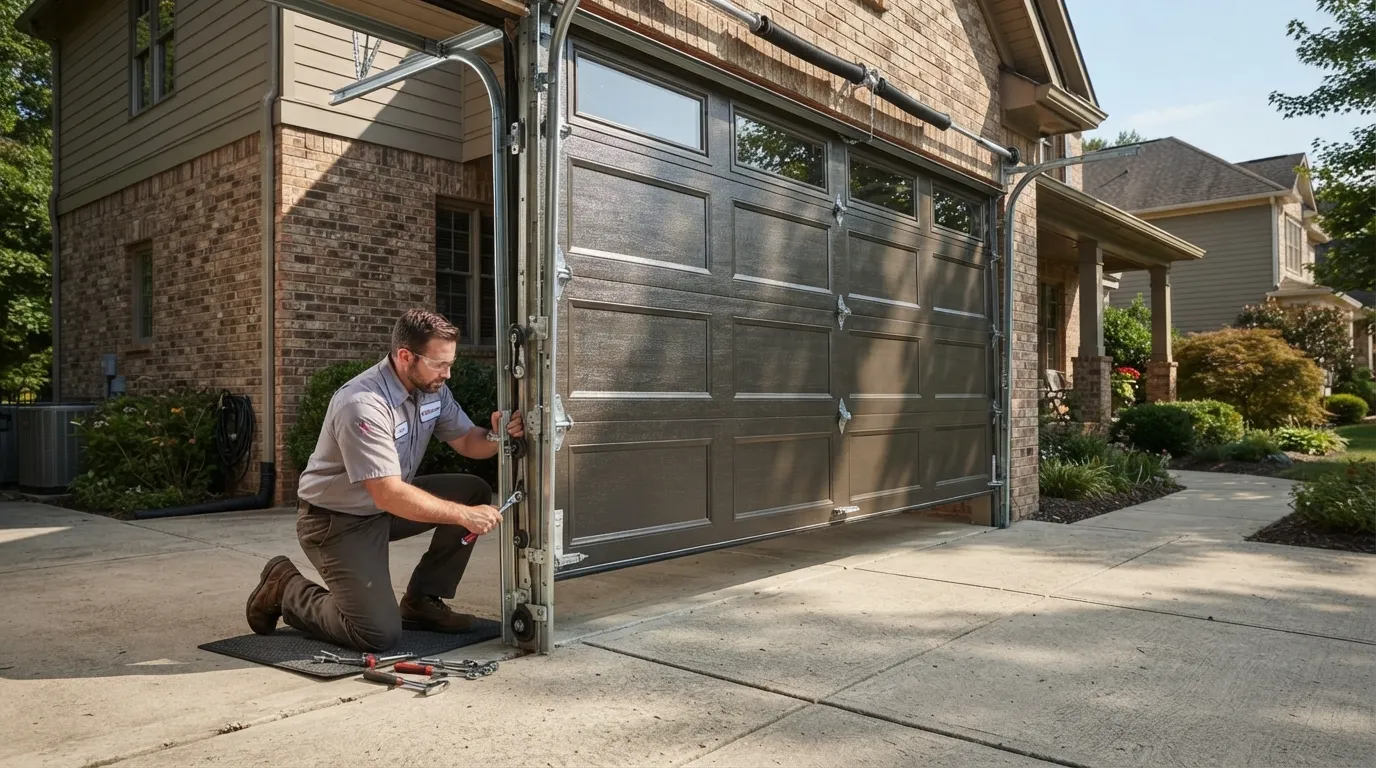
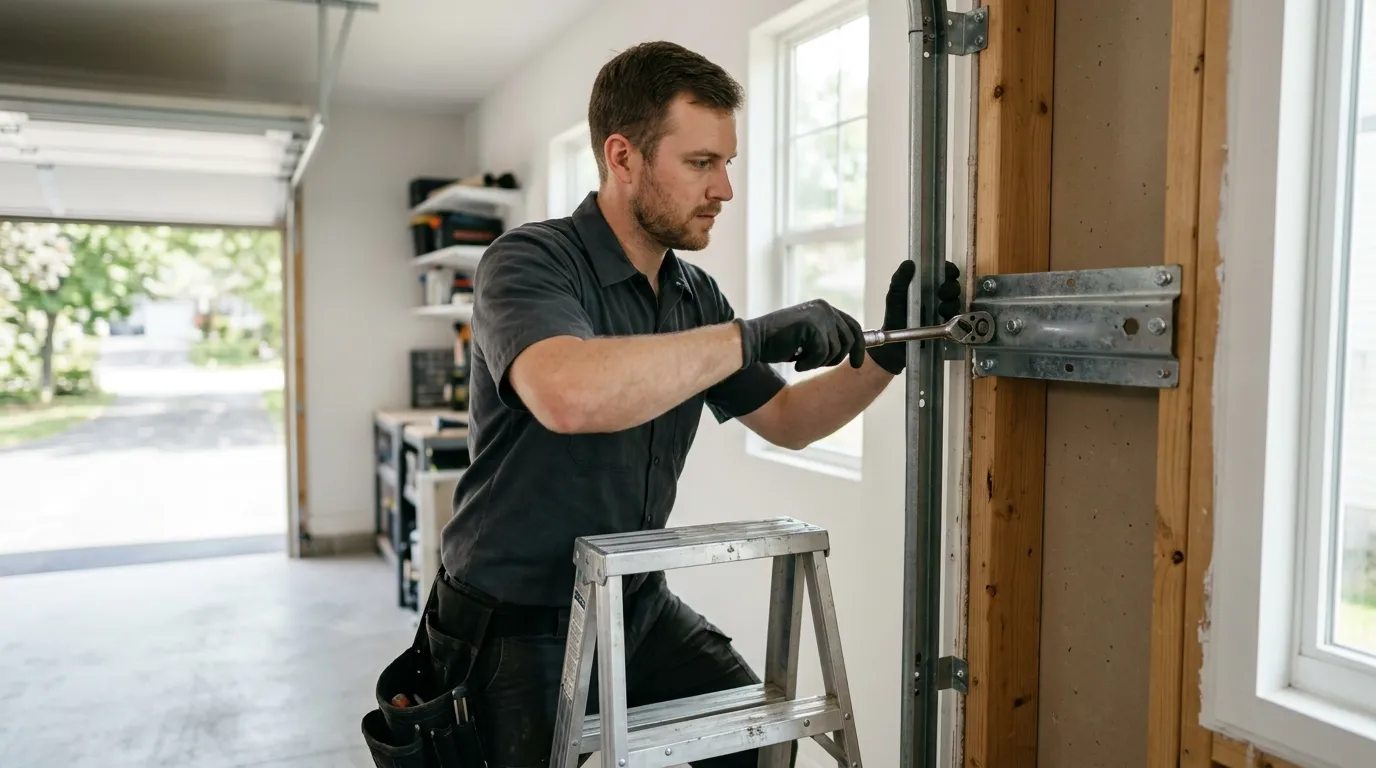
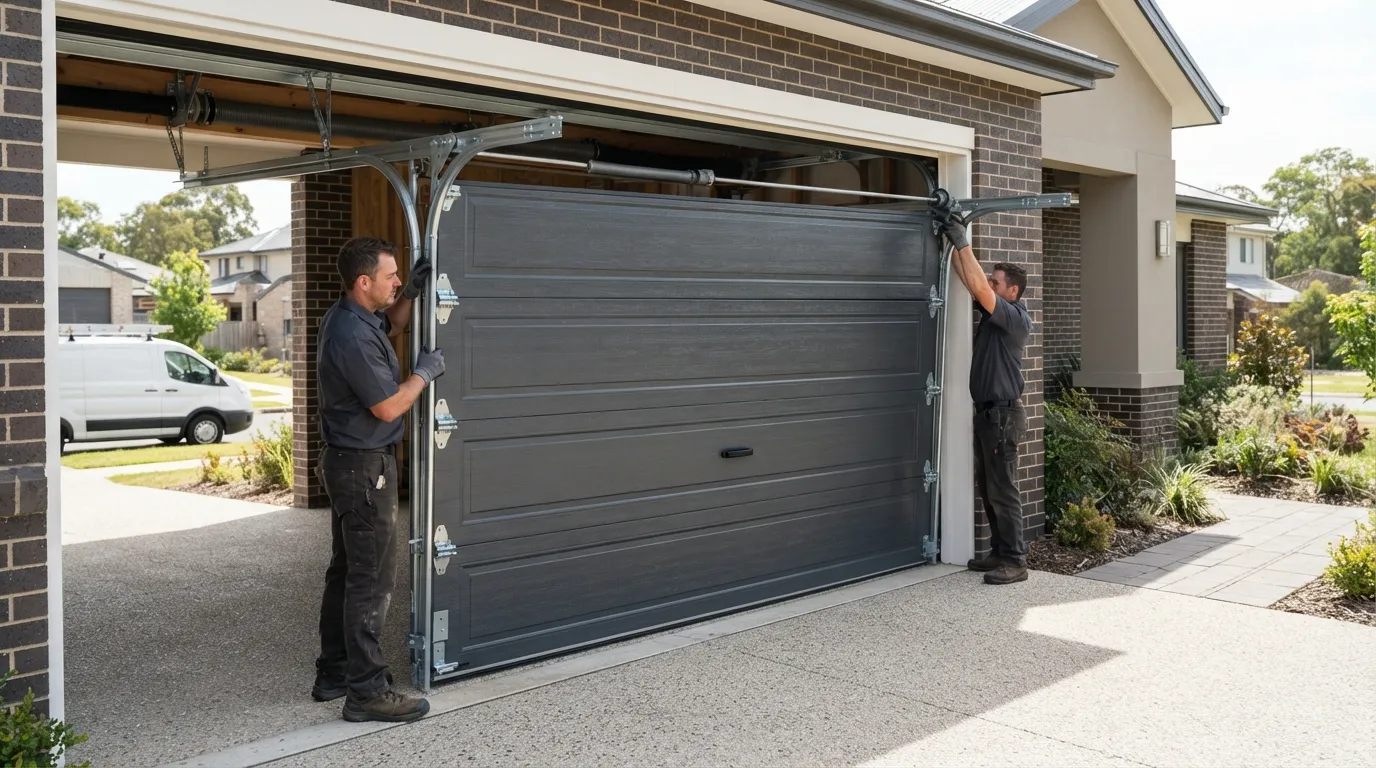
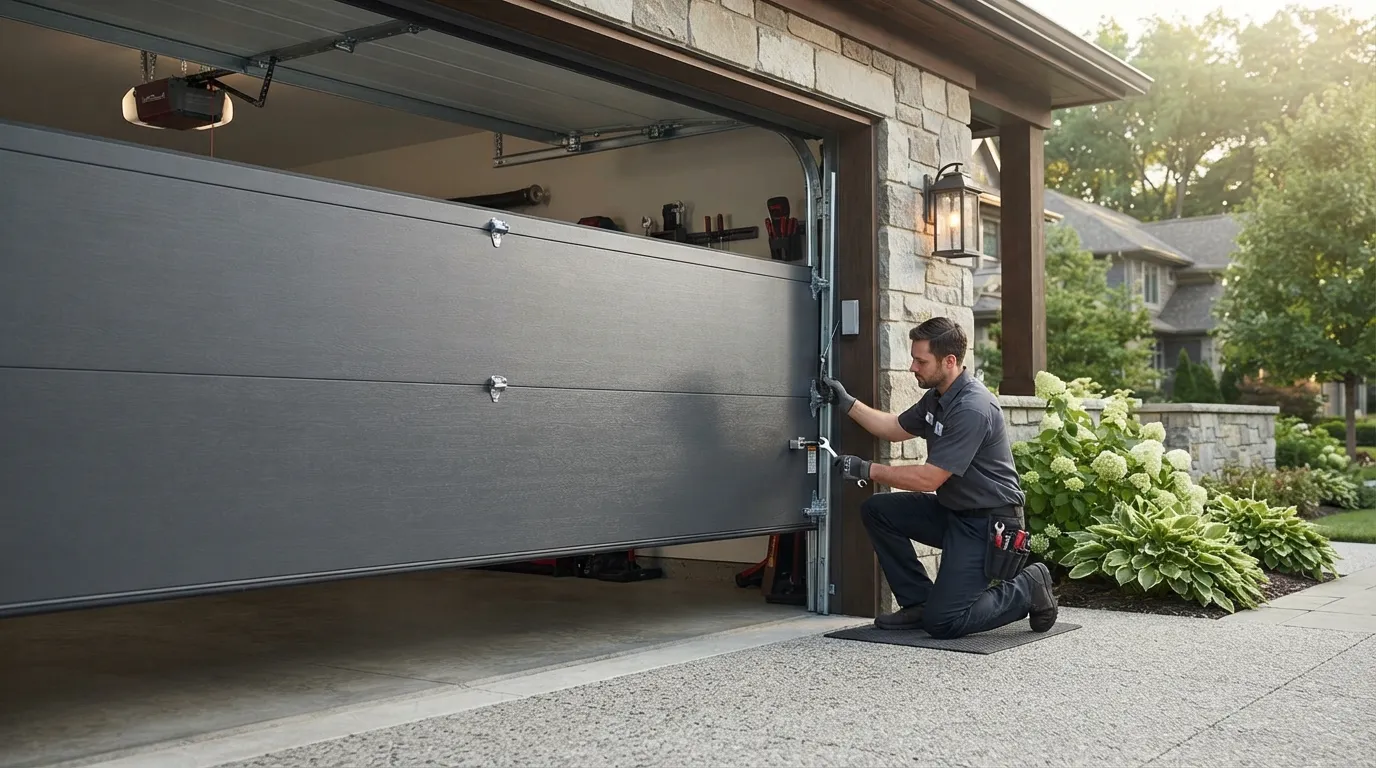
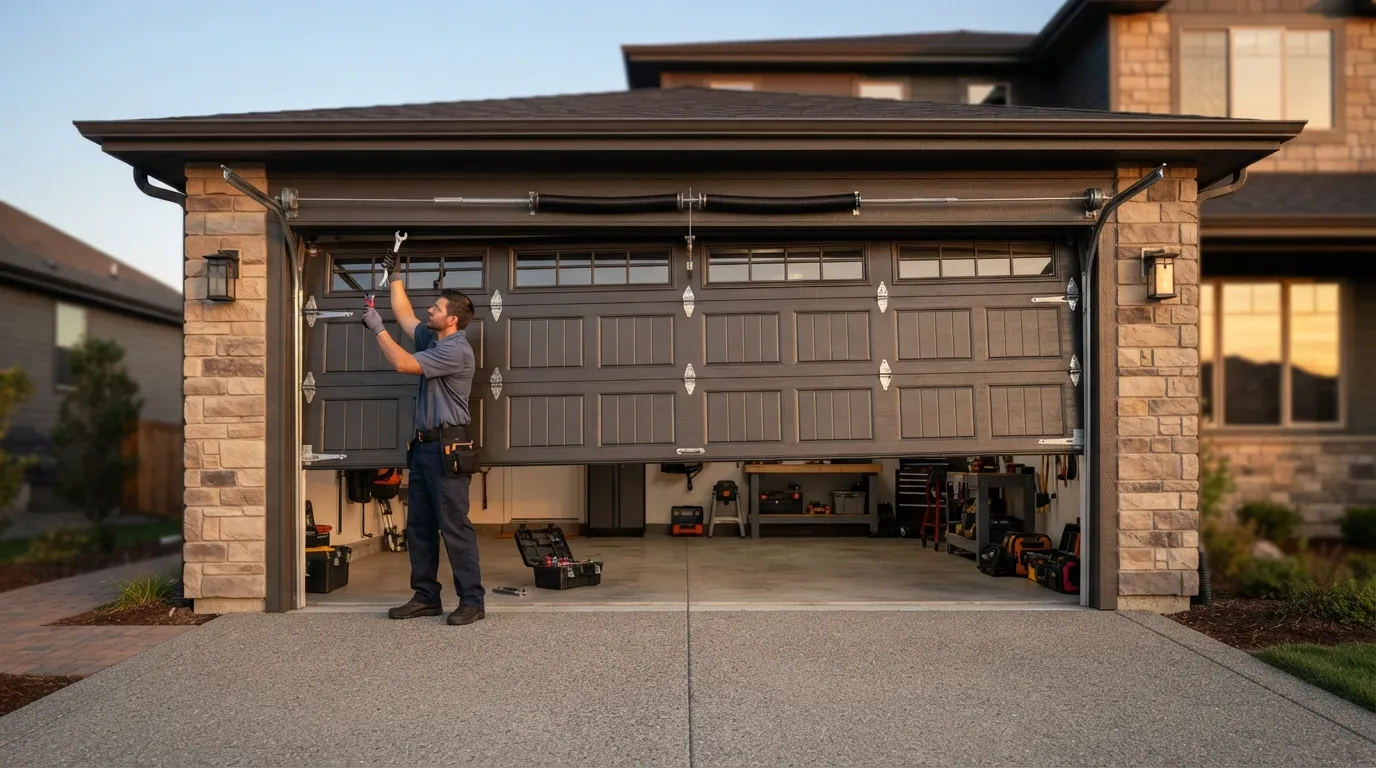
A house built around 1980 in Jurupa Valley almost always shipped with steel rollers running in steel track, no nylon, no sealed bearing. Forty-plus years of that steel-on-steel contact wears a groove into the roller stem and chews up the track edge at the same time, which is why a roller swap on a door this old often turns into a track inspection too.
We also see stems that have rusted enough to seize inside the roller housing, so the wheel stops spinning and just drags - that's the grinding sound owners describe on the phone before we even see the door. It's not a spring problem and it's not the opener; it's a $15 part that's been dragging for years.
With 27,132 households in this area and most of the stock dating to the same build window, this is one of the more common calls we get from Jurupa Valley specifically, more than from newer subdivisions where doors are still on their factory nylon rollers. We're not guessing at your door's age from the outside - the wear pattern on a 40-plus-year-old steel roller looks nothing like a roller that's failed after five or ten years of normal use, and we tell you which one we're looking at before we start pulling anything apart.