Spring load body danger
A torsion spring under load can put a person in the ER, and a door that's off its rollers can jump the track further if you keep cranking on it.
Corona, CA
Broken spring or stuck door at 2am? Corona Garage Door Pros handles emergency garage door repair across Corona and the surrounding service area, day or night.
DIY or pro
If the door won't open and you can hear the opener motor straining or clicking without movement, stop pulling the emergency release cord and stop forcing the door by hand.
A torsion spring under load can put a person in the ER, and a door that's off its rollers can jump the track further if you keep cranking on it.
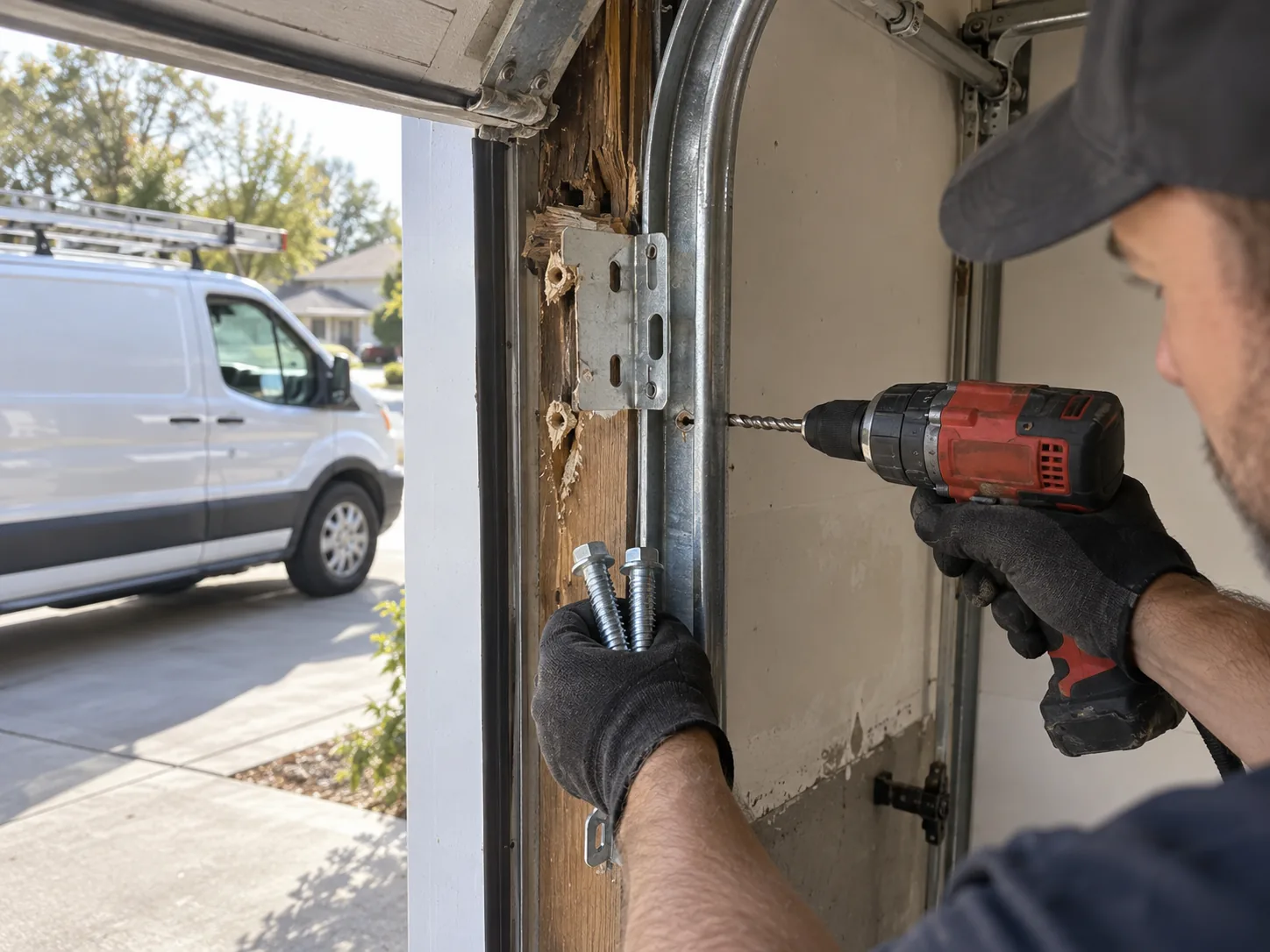
There's a short list of things worth trying before you call anyone: check that the wall switch and remote both fail the same way (rules out a dead remote battery), look at the sensors near the floor for a blinking light (a kicked-over sensor is a five-minute fix, not an emergency), and check the breaker if the opener light is dead too. What you should not do yourself: touch a torsion spring, straighten a bent track with a pipe wrench, or keep hitting the button on a door that's binding halfway up.
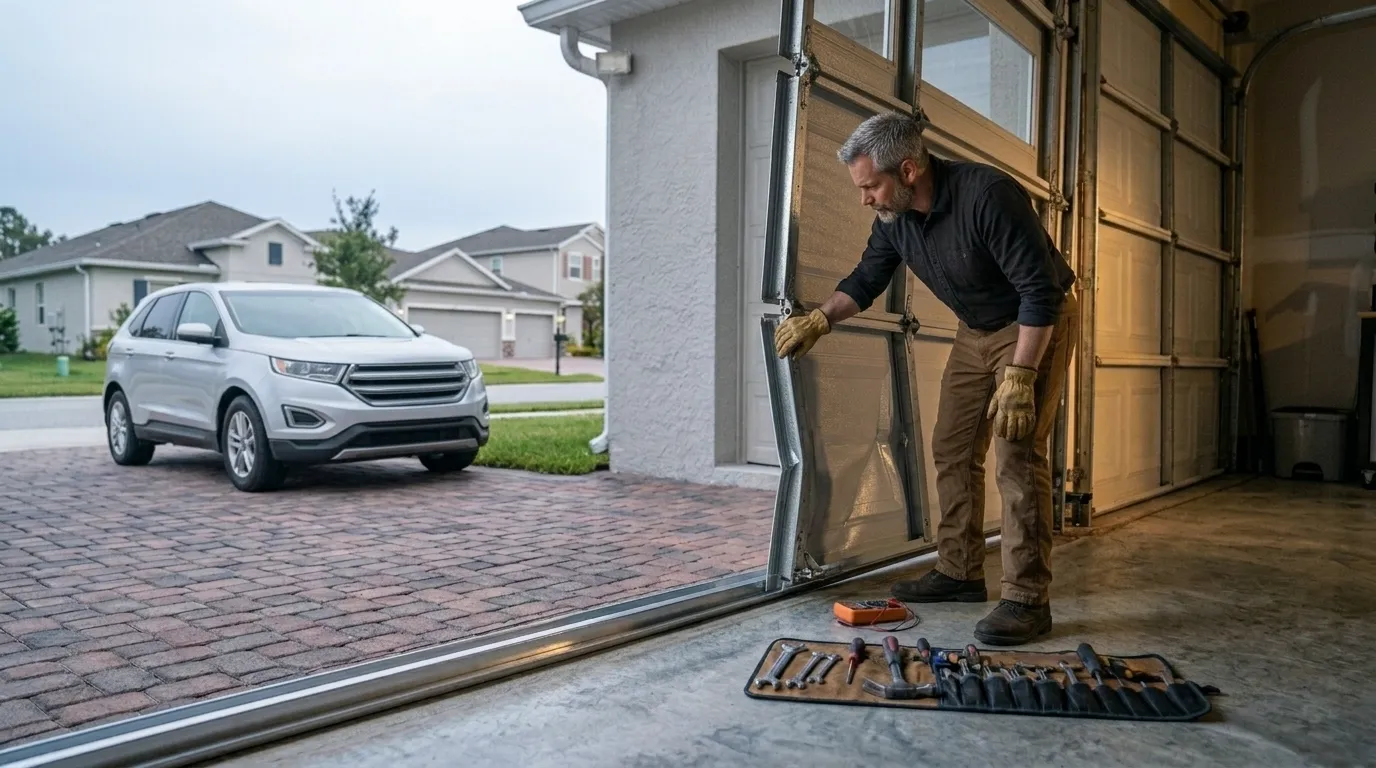
Corona's housing stock runs from 1938 through 2007, with a lot of it dating to the 1980s and 90s, so a good share of the springs and openers out there are original or close to it and they don't fail gently. If the door is off track, a cable has snapped, or a panel is caved in from a car backing into it, that's a call, not a project.
Warning signs
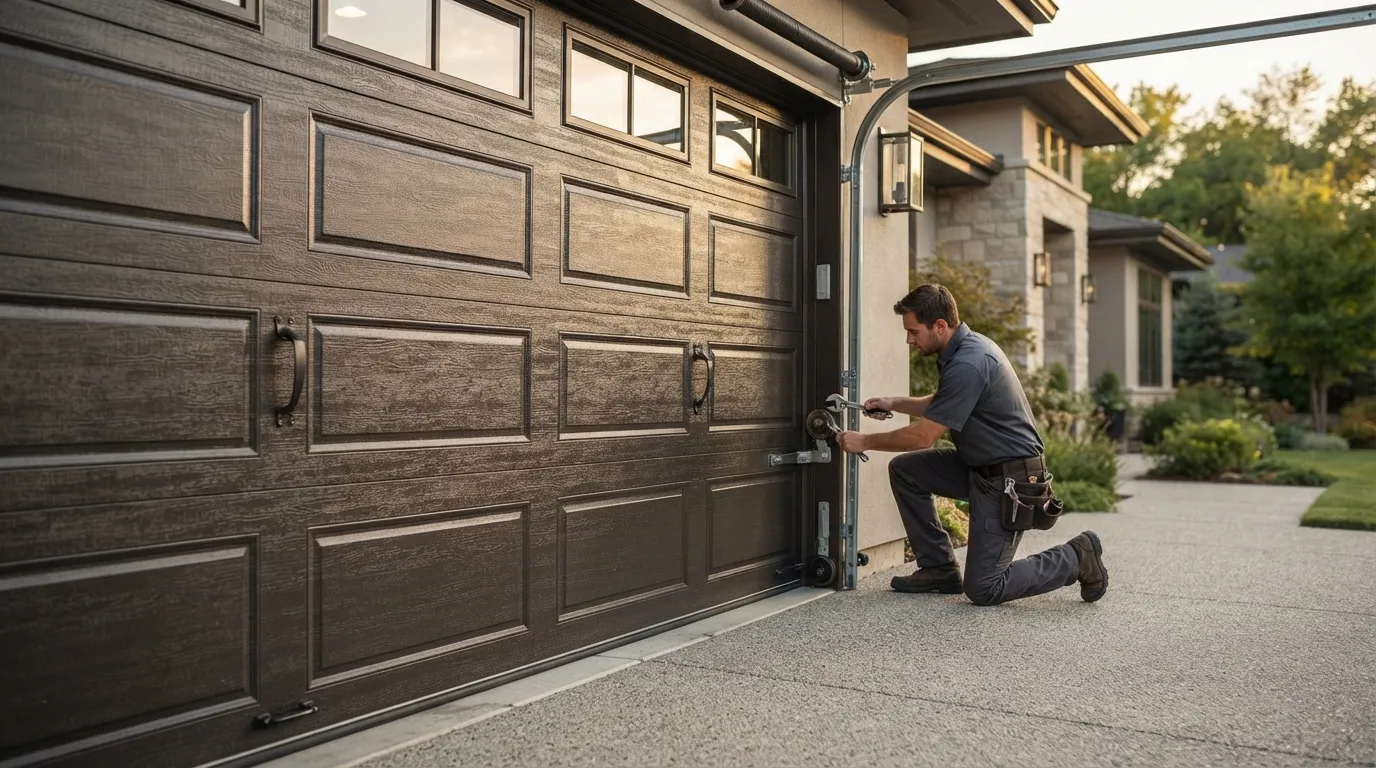
The most common emergency call is a broken torsion spring - the door feels like it weighs 300 pounds because it suddenly does, and it won't stay up on its own even with help.
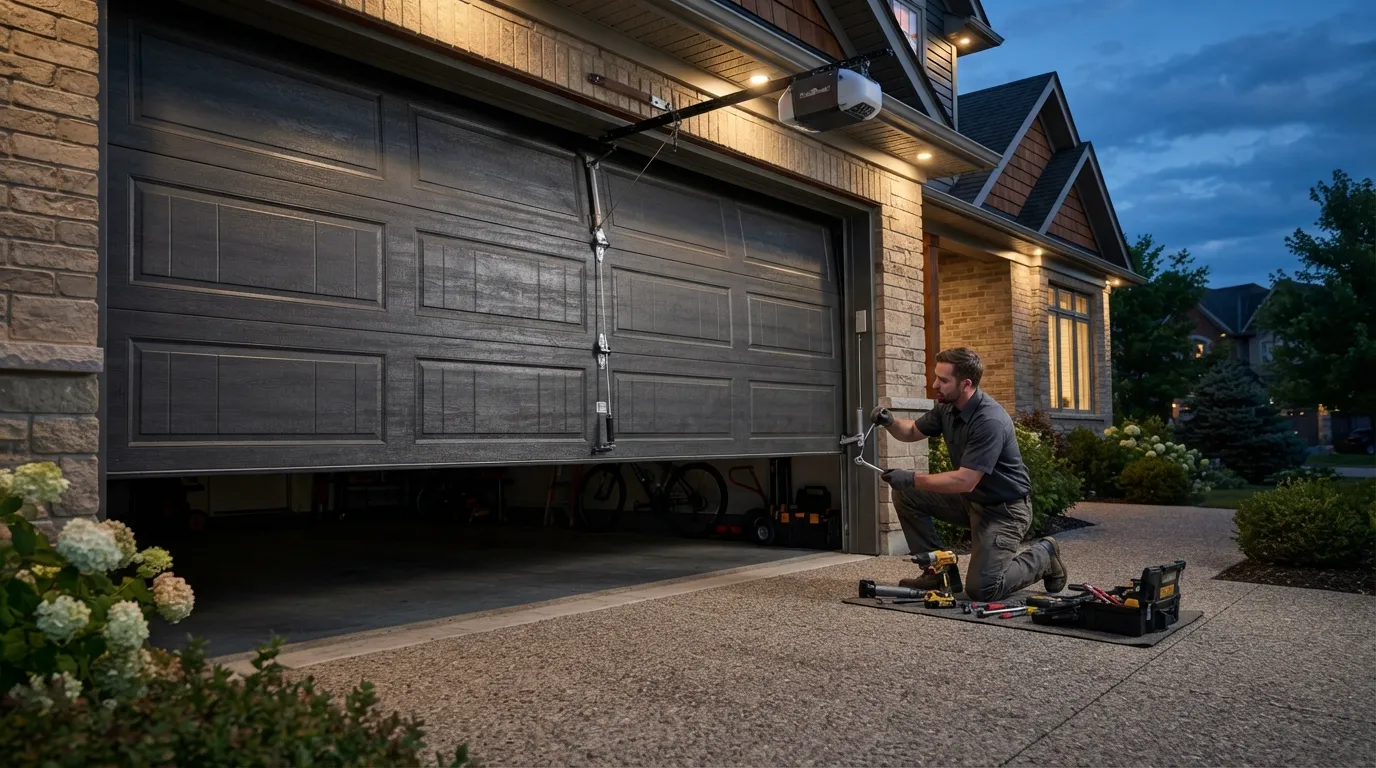
Right behind that: a snapped cable, usually paired with a door that's dropped unevenly on one side and jammed in the tracks. Opener failures show up differently. The motor runs but the door doesn't move (stripped gear or worn drive belt), or the door reverses immediately after touching the floor (a limit or sensor problem, not always urgent).
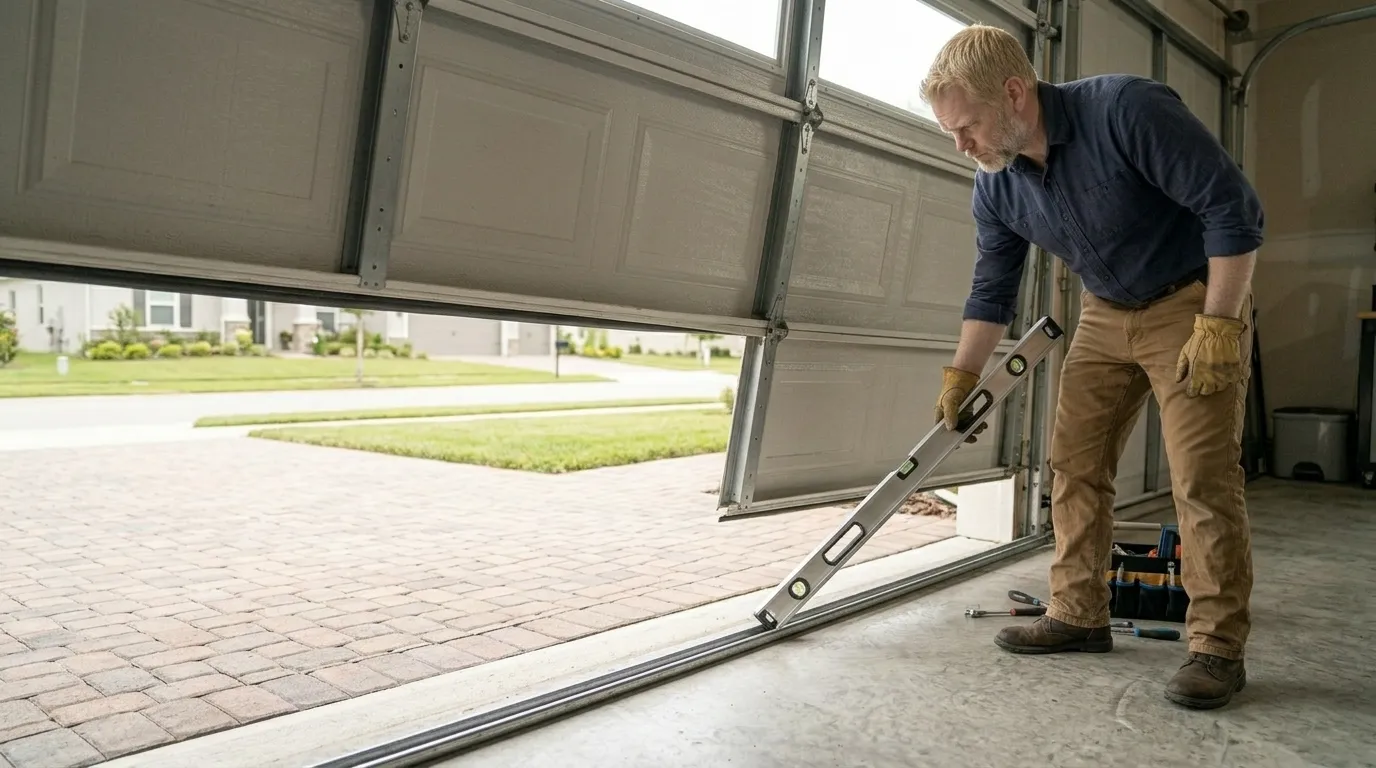
A door that's come off its rollers on one side, or has a bent track from a vehicle impact, will usually still get partway open before it binds hard. Across the roughly 267,000 households in this service area, with a little over half being owner-occupied houses, we see all of the above weekly, not rarely.
None of it is exotic. The parts and failure patterns repeat because the housing built through the 1980s-90s across the area used similar torsion setups and openers, and thirty-plus years in, those components are past or near end of life at the same time.
Local causes
Two things drive most of the emergency calls we run: age of the equipment and heat cycling. With median housing age landing around 1981 across the service area, a large share of garage doors have springs and openers that are original or one replacement cycle deep. Torsion springs are rated for a set number of cycles, and once a spring built in the early 80s hits that number, it lets go without warning - often on a normal open, not during a storm.
Heat plays a role too. The climate here runs a moderate heat band, and repeated hot-day expansion and cooling at night works on steel fatigue over decades the same way road salt works on cars in colder states - slower, but it adds up. Metal tracks and cable ends that have baked through enough summers get brittle at the point where they flex most, which is usually right where a cable clamps to the bottom bracket.
We don't see much cold-weather failure here the way some regions do - no ice-jammed tracks, no frozen openers. What we see instead is fatigue failure: parts that have simply cycled and heated enough times that they're done. That's a different diagnosis than storm damage, and it means the fix is almost always spring or cable replacement, not troubleshooting electronics.
Our process
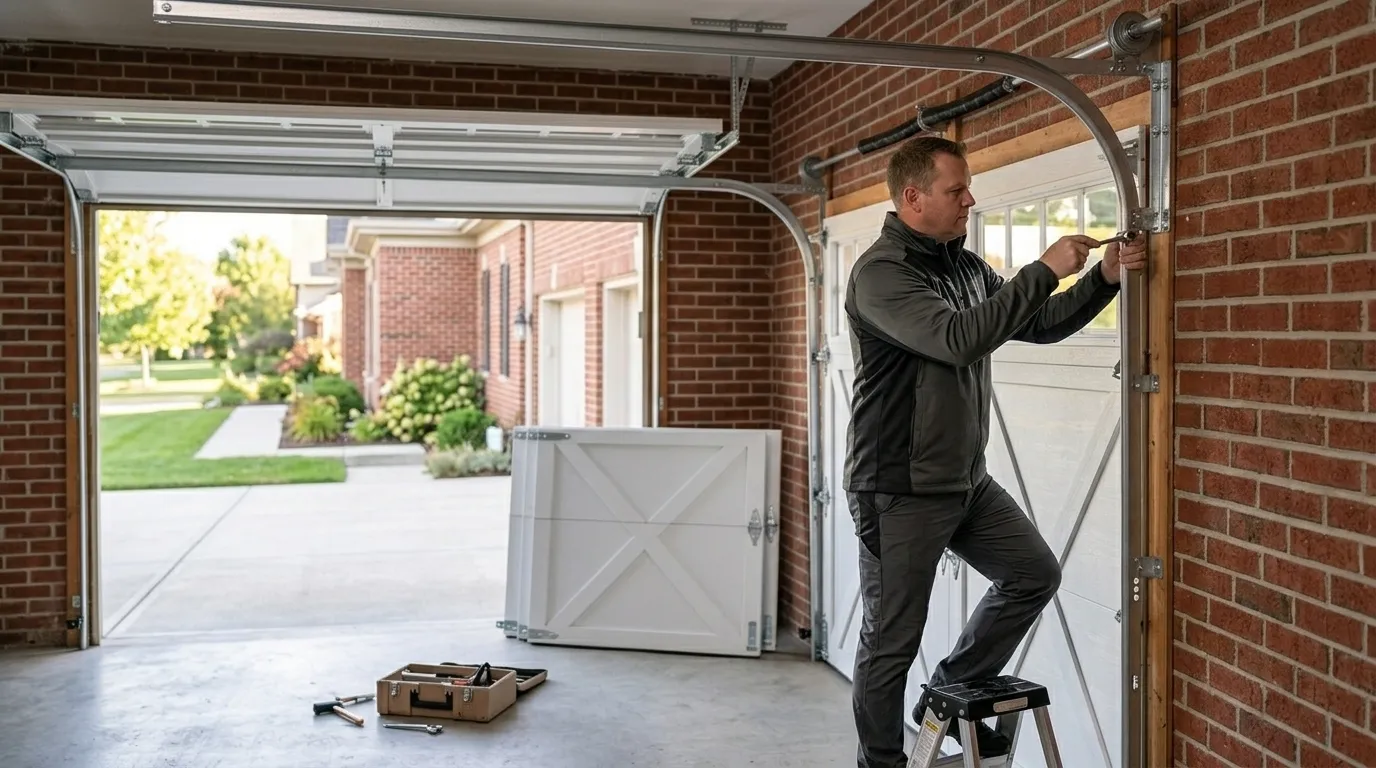
For a broken spring, we replace both springs on a double door even if only one snapped - if one's gone from age, the other is close behind, and doing them separately just means a second call in a few months.
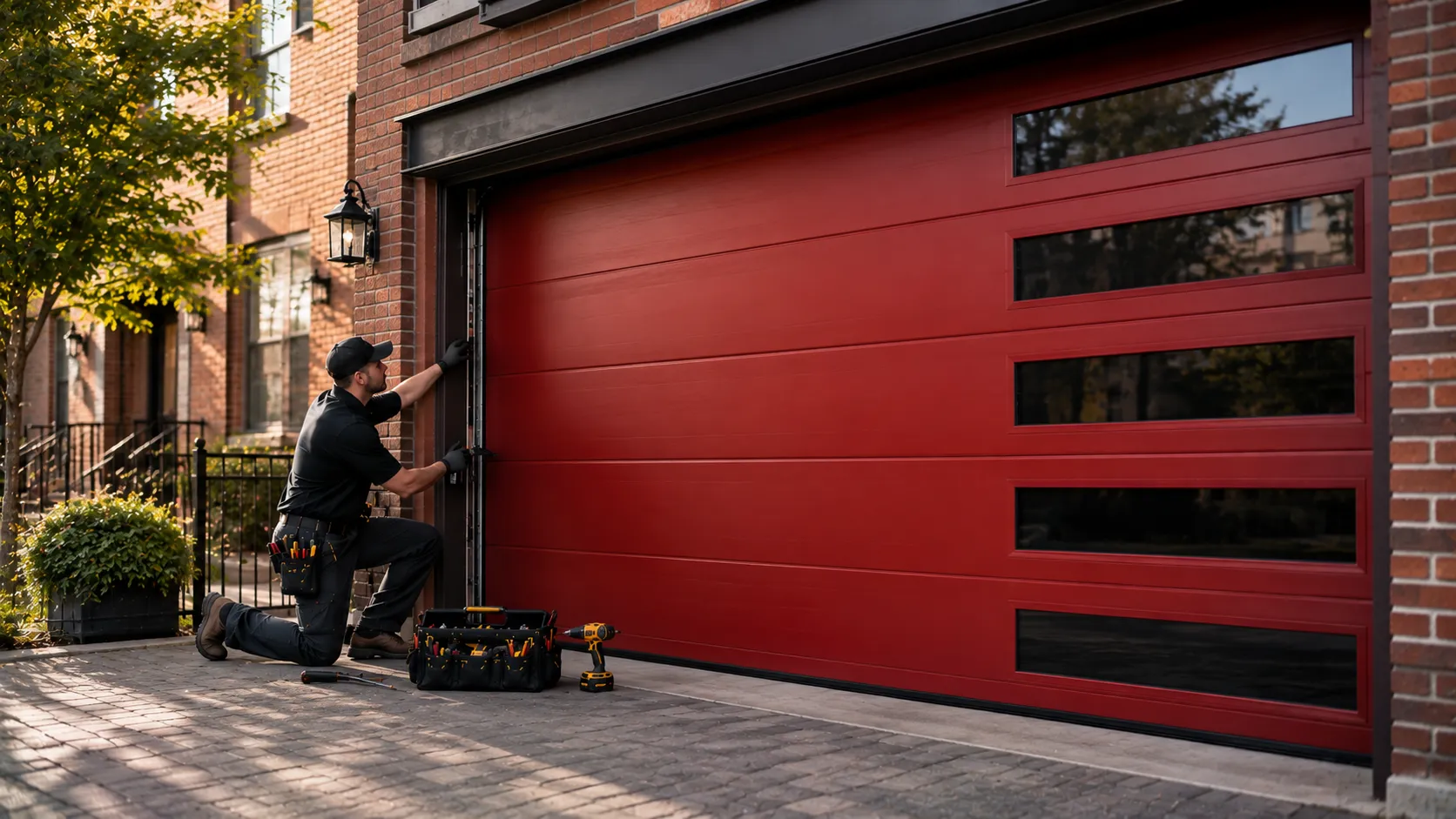
Cables get replaced in pairs for the same reason. For a door off its tracks or a bent track from an impact, we assess whether the track can be straightened and reset or needs to be swapped - a track that's kinked at the bend point rarely holds alignment once forced back, so we're honest when it's a track-replacement job rather than a quick bend-back.
One limitation worth saying up front: if a panel is badly caved in, matching the exact panel from an older door - especially anything from the 1980s or 90s runs common in this area - isn't always possible, since manufacturers change panel profiles over the years.
Sometimes the honest fix is a new door section or a full door rather than chasing an obsolete match. We'll tell you which situation you're in before we start, not after.
Questions
We don't quote a fixed response window here since it depends on where you are in the service area and what's already on the truck that day. Call and we'll give you a real estimate for your location rather than a generic promise.
If the door is stuck open, it's a security problem - treat it as urgent. If it's stuck shut and the car's inside, that's inconvenient but not dangerous; it can usually wait a day if you need to schedule around your own timing.
Torsion springs are rated for a set number of open-close cycles, and they typically fail at the end of that life, not gradually. With a lot of the area's housing dating to the 1980s and 90s, plenty of springs are hitting that end-of-cycle point now, decades after installation.
On a double-spring setup we replace both, even if only one broke. They're installed at the same time and wear at close to the same rate, so leaving the old one in almost always means a second failure within months.
Explore more
Ready when you are
Corona Garage Door Pros repairs and installs garage doors, springs and openers in Corona, CA and the surrounding area.