The Problem
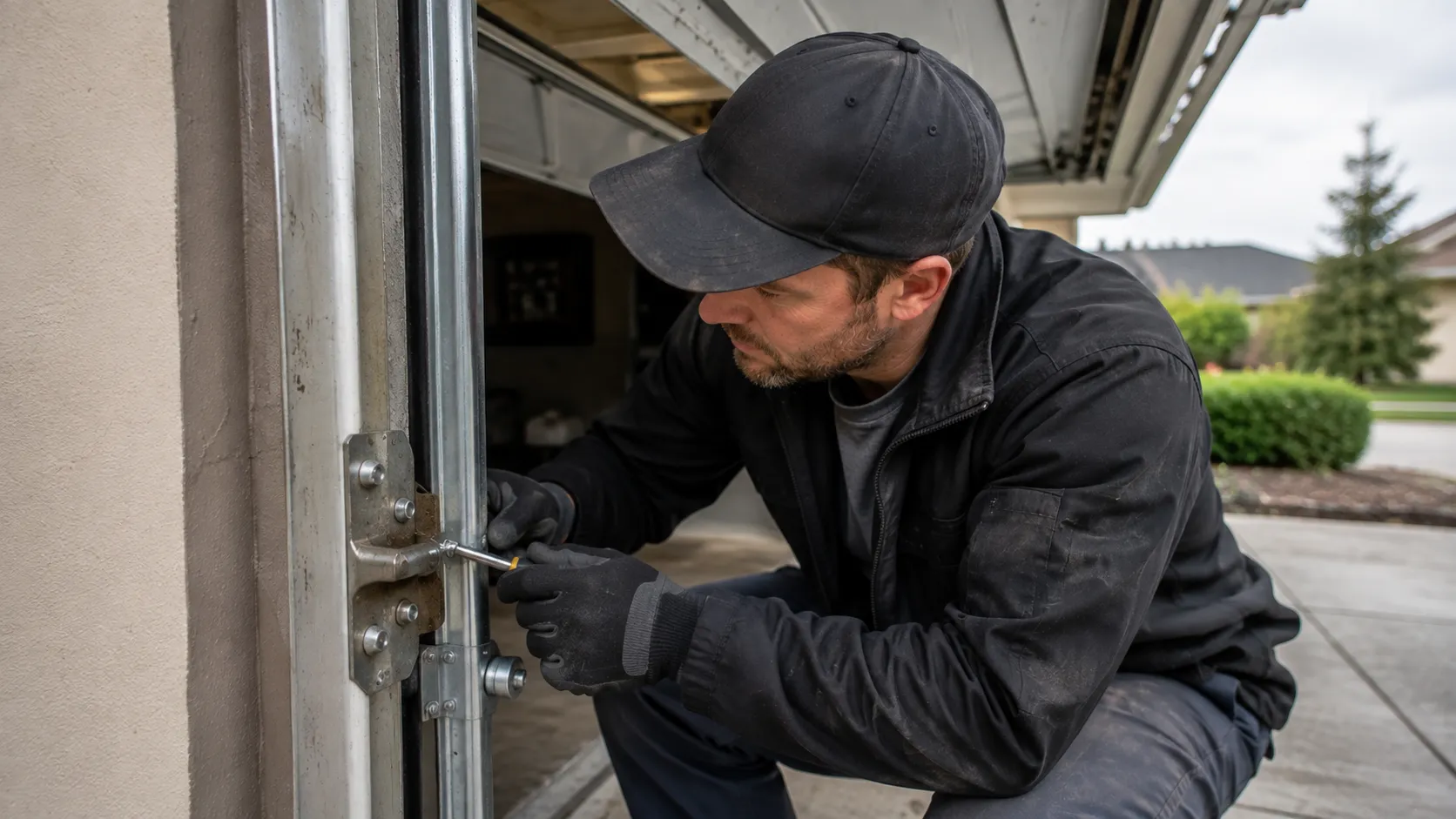
A door goes off track when the rollers stop riding cleanly inside the vertical or horizontal rail, usually because something upstream of the roller has moved or worn out. A bent track, a broken roller, a cable that's paid out unevenly on one side, or a bracket that's worked its screws loose from the jamb will all pull the door sideways as it travels.
In Corona, age is the bigger factor than most owners expect. Housing here was built between 1938 and 2007, with the median home going up around 1981. That means a large share of the doors in this service area are hanging on track brackets and hardware installed decades ago, often before the door itself was ever replaced. Wood jambs that have shifted a quarter inch over 40 years throw the track brackets out of plumb, and once the track is out of plumb, the rollers ride the edge instead of the channel. That's the mechanical root of most off-track calls we see, not a single dramatic event but a slow drift that finally makes the door bind, jump, or drop on one side.
A cracked roller or a snapped cable can do the same thing overnight, but on most calls the misalignment has been building for a while before anyone notices.
What You Pay
We don't have a flat number to quote you here, and that's an honest limit - track repair cost depends on whether it's a bent rail, a full bracket reset, or a spring involved in the same failure, and we won't guess at that before we've looked at the door.
What we can say is this: across this service area, median household income runs $108,588, and that's a market where most owners we talk to choose to fix the track and swap the rollers on both sides in one visit rather than patch just the bent section. A one-sided repair on a door that's already out of plumb tends to come back within a year, so the math usually favors doing both sides once.
If your opener is still fighting the door when it's off track, don't keep running it - that's how you strip the gear or burn out the motor, and now you're paying for two repairs instead of one.
What Local Conditions Do
Corona sits in a moderate-heat climate band, not the extreme swings you'd get further inland or up in elevation. That matters for track wear because the movement here is gradual - steel track and brackets expand and contract across the seasons rather than snapping through a hard freeze-thaw cycle. The failure mode that shows up is slow loosening: screws backing out of the jamb a sixteenth of an inch at a time, track brackets that were torqued tight in 1985 and haven't been touched since.
Combine that with a housing stock that's mostly 1980s-90s construction across the 30 named areas in this service area, and you get a specific and common pattern - original track hardware, original brackets, on a house that's settled just enough over three or four decades to pull the rail a few degrees out of true. It's not dramatic, and it's not weather damage in the way a hailstorm or a hard freeze would be. It's just time and heat cycling working on hardware nobody's inspected since it went up.
When to Get Help
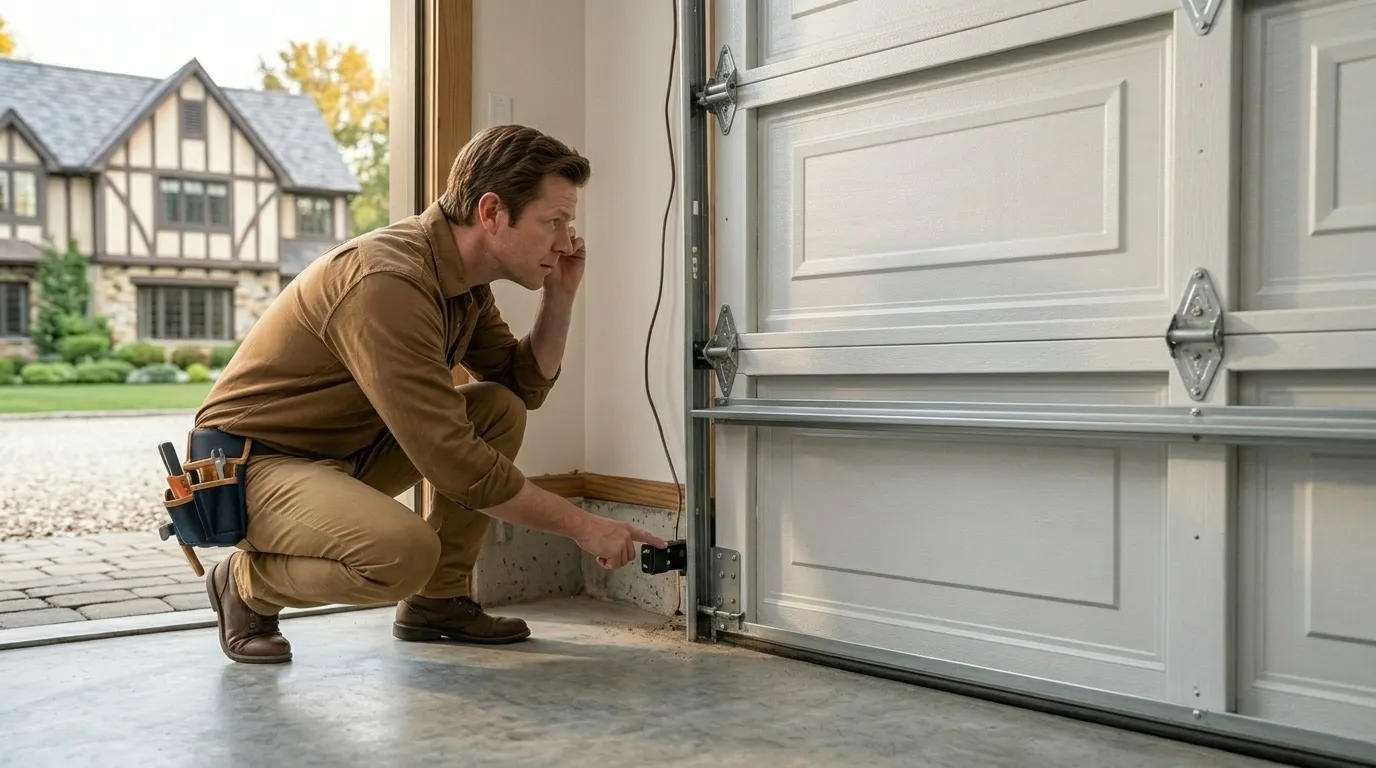
Call before the door comes off the track entirely, not after. Warning signs: the door rattles or scrapes on one side going up or down, one bottom corner sits noticeably lower than the other when it's closed, or you can see daylight between the roller and the track at any point in the travel.
If the door has already jumped the track, stop using the opener. Don't try to force it back into the rail yourself - a door under spring tension that's off track can drop without warning, and that's not a repair to improvise.
If you're in an older section of Corona where the house dates to the 1938-2007 range and the track has never been replaced, we'd rather come look at the brackets and jamb before you spend money on rollers alone. Sometimes the roller is fine and the bracket is the actual failure point, and swapping rollers on a bent rail just buys you a few more months before the same call happens again.
Talk to a local pro
Garage door trouble in Corona?
Same-day service with honest, upfront quotes.