
Lighter panel thin steel
These are lighter doors than what you'd find on a 1960s tract house - thinner steel skins, foam-filled panels, and track brackets sized for the shorter working life builders expect out of production housing.
Eastvale, Corona
Eastvale homes run newer, wider steel sectional doors on tight rollers. Here's why they jump track and how Corona Garage Door Pros gets them running again.
Warning signs
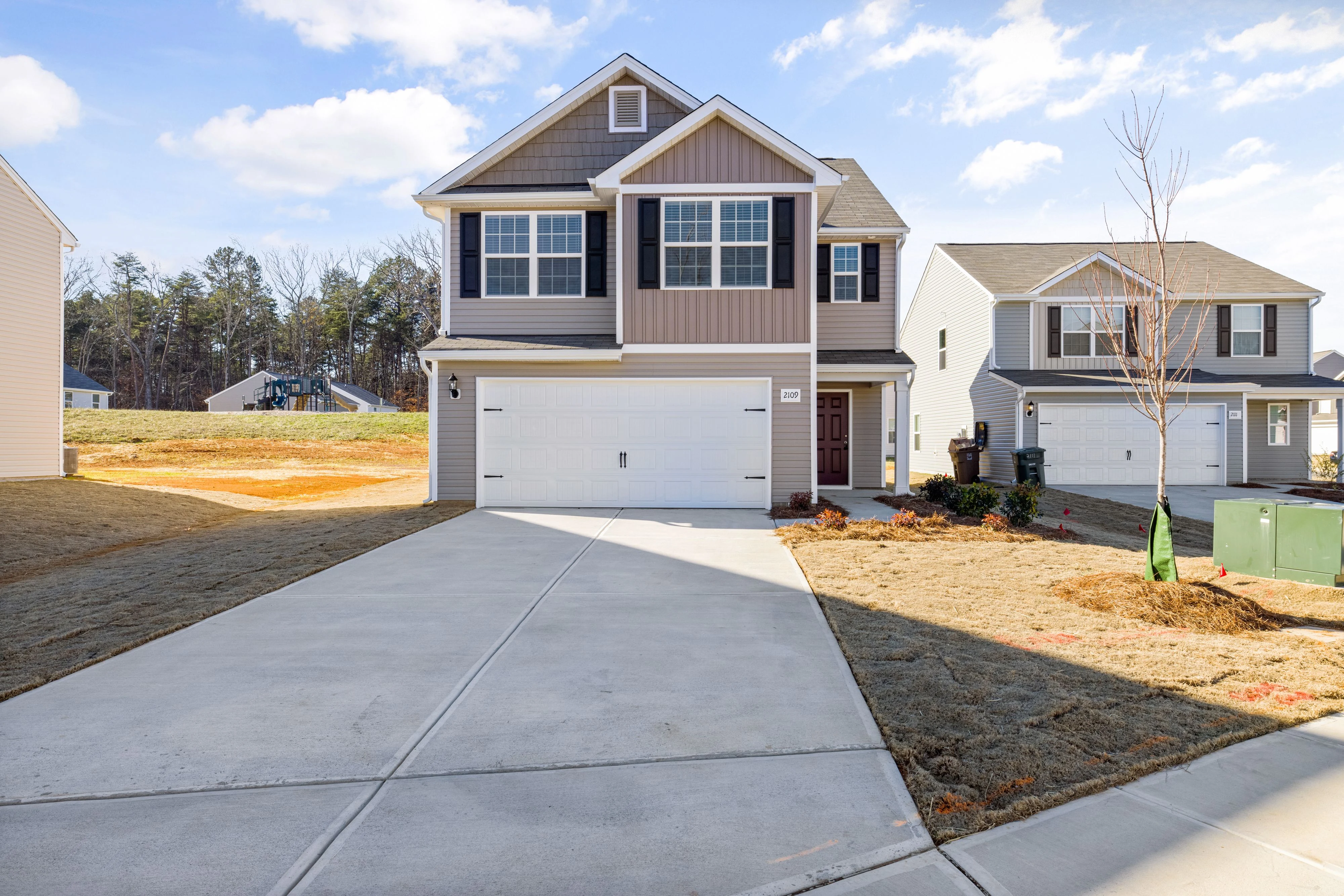
Eastvale's median home was built around 2007, which means most garage doors here are wide steel sectional units, often two-car spans of 16 feet, hung on nylon rollers in a track set that's still factory-original.
These are lighter doors than what you'd find on a 1960s tract house - thinner steel skins, foam-filled panels, and track brackets sized for the shorter working life builders expect out of production housing.
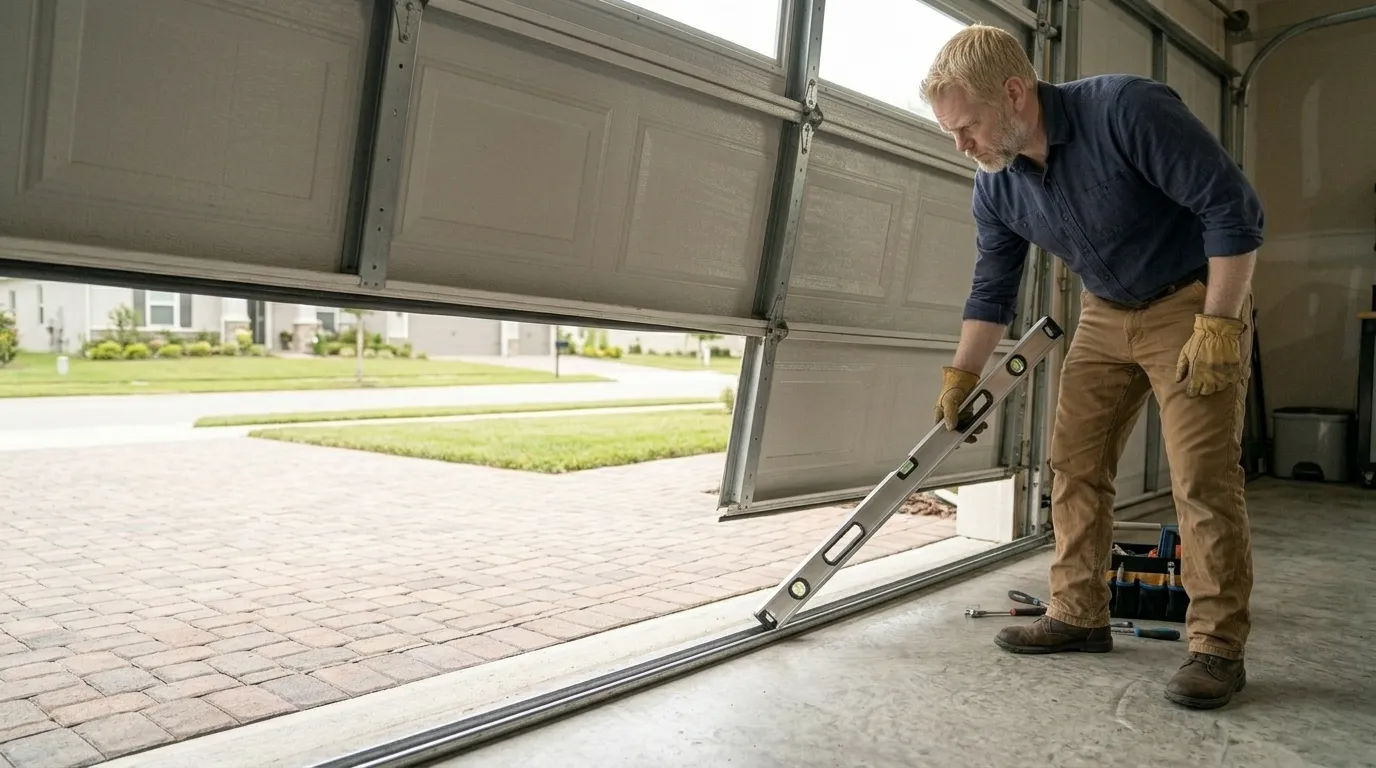
When a door like this jumps track, you'll usually see one bottom corner dropped low while the other side sits high, or a panel that's bowed outward where a roller popped its groove. Sometimes the door still opens and closes but scrapes metal-on-metal at one spot every cycle.
Because the panels are lighter than older doors, they flex more when a roller comes loose, which is why an off-track fault on a newer door can look worse cosmetically - a visibly bent track or a dented panel edge - even though the underlying fix is often simpler than on heavier, older stock.
Booking
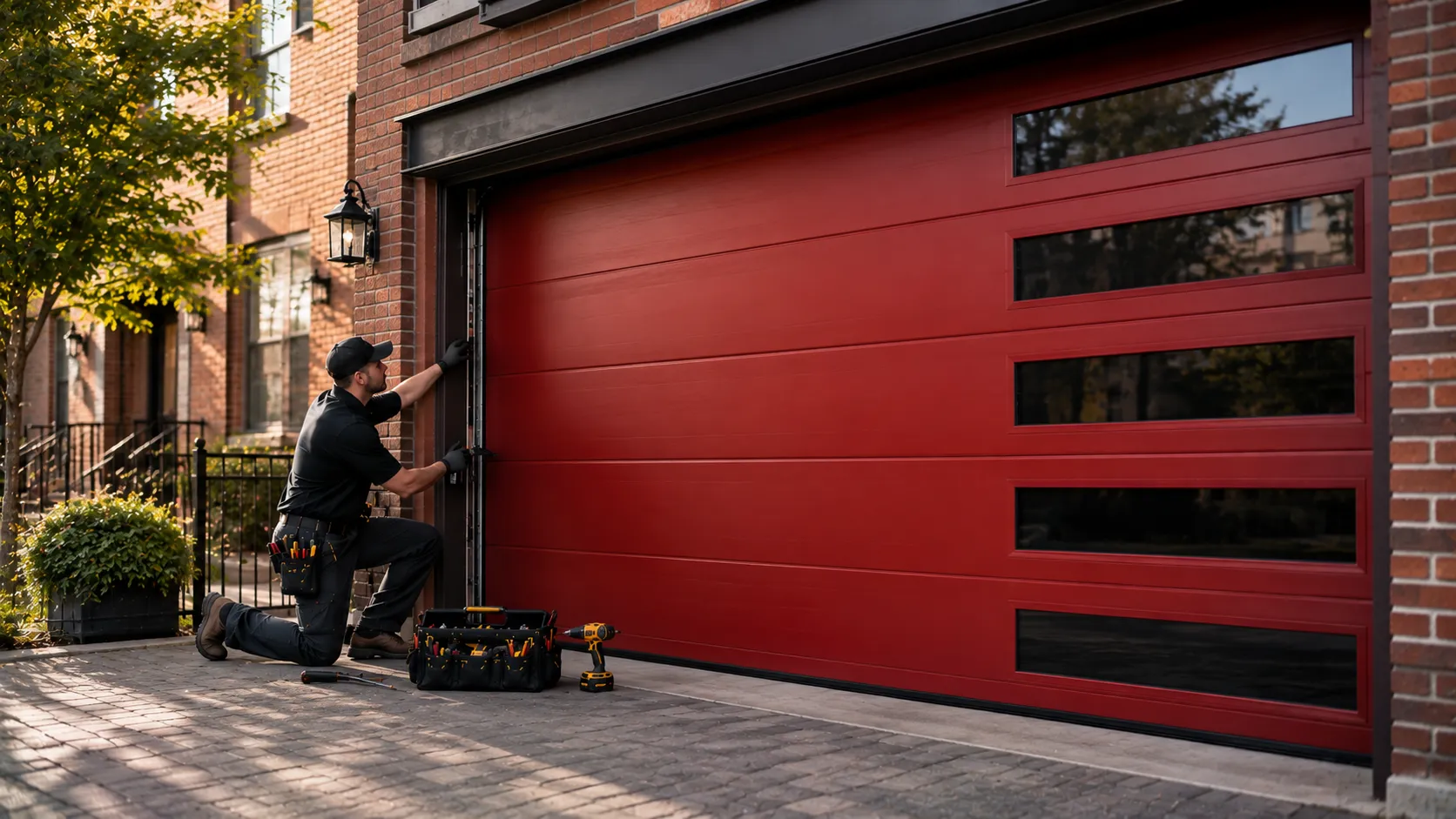
We run out of Corona, about 7 miles from Eastvale, so booking a job here means telling us what you're seeing on the phone or through the coverage page and giving us a rough sense of the door's age and size. We don't keep a branch or a crew stationed in Eastvale - every job is a truck coming from Corona, so the more specific you can be about which corner dropped, whether the opener still runs, and whether the door is stuck open or shut, the faster we can bring the right rollers and track hardware instead of guessing on site.
Local causes
Because Eastvale's housing stock is recent, the off-track calls we see aren't usually about worn-out hardware from decades of use - they're about factory tolerances that were fine for the first several years and are now getting tested.
A roller that was never quite seated right, a track bracket that was torqued a touch loose during construction, or a bottom bracket cable that's stretched slightly under a wider-than-average door span.
On a 16-foot double door, even a small amount of track misalignment shows up faster than it would on a narrower single door, because there's more panel weight riding on the same two rails. We also see it after someone's own attempt to free a jammed door pushes a roller further out of its track rather than back in.

Timing
Most off-track jobs on this newer door stock are a same-visit fix - realigning the track, reseating or swapping rollers, and checking the bottom brackets and cables that hold the door square. We don't have a set number to promise you here, and we won't invent one; what we can tell you is that a straightforward roller-and-track realignment is usually quicker than a job where the track itself is bent or a cable has frayed, which needs replacement parts on the truck rather than adjustment tools.
Watch-outs
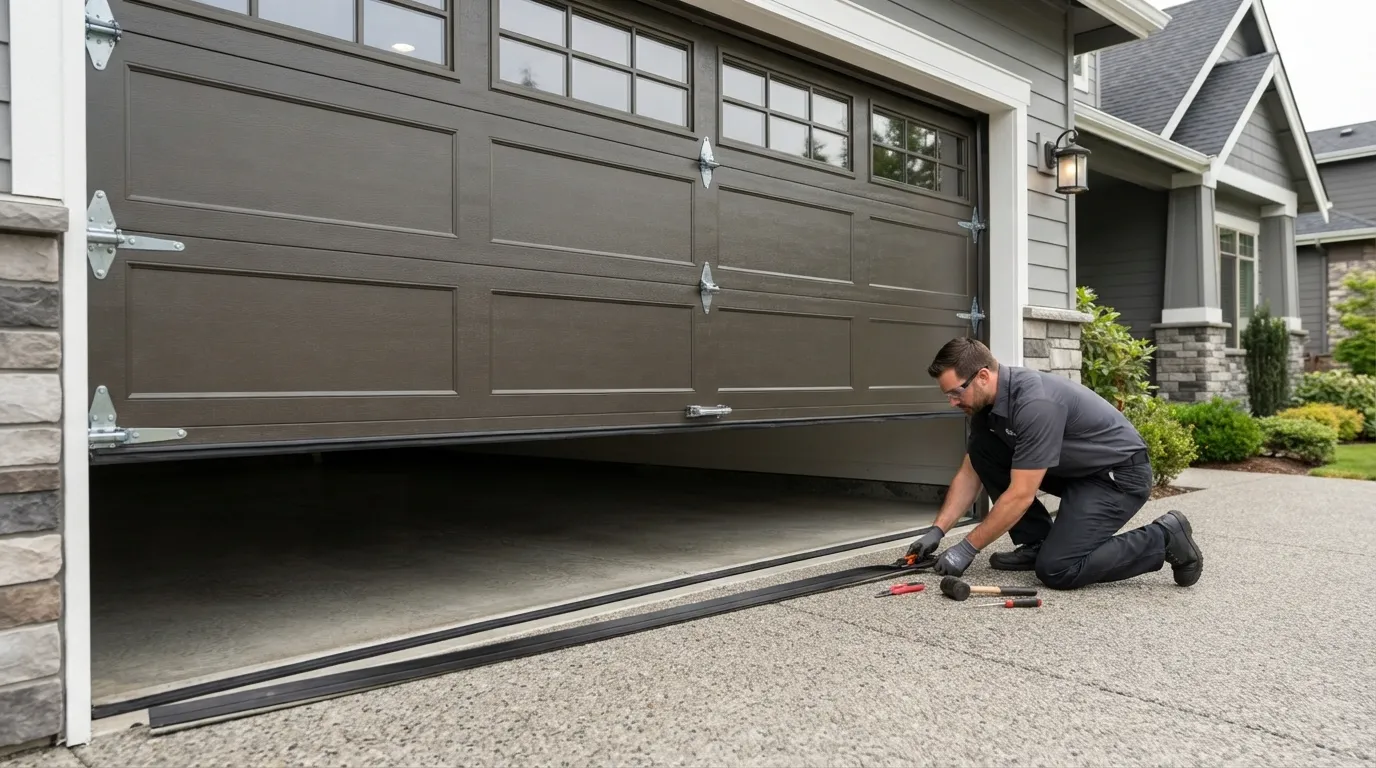
The complication we run into most in Eastvale is a door that's been forced closed or open after it jumped track, which can bend the track rail itself rather than just knocking a roller loose.
A bent rail can't be hammered straight and trusted - it needs to come off and be replaced, and that's a different job than a realignment.
The honest limitation here: if the track is bent in more than one spot, or the bottom bracket has torn loose from the panel, we'll tell you straight that a patch job won't hold, and we'll price the fix accordingly rather than charge you twice for a repair that doesn't last.
Our process
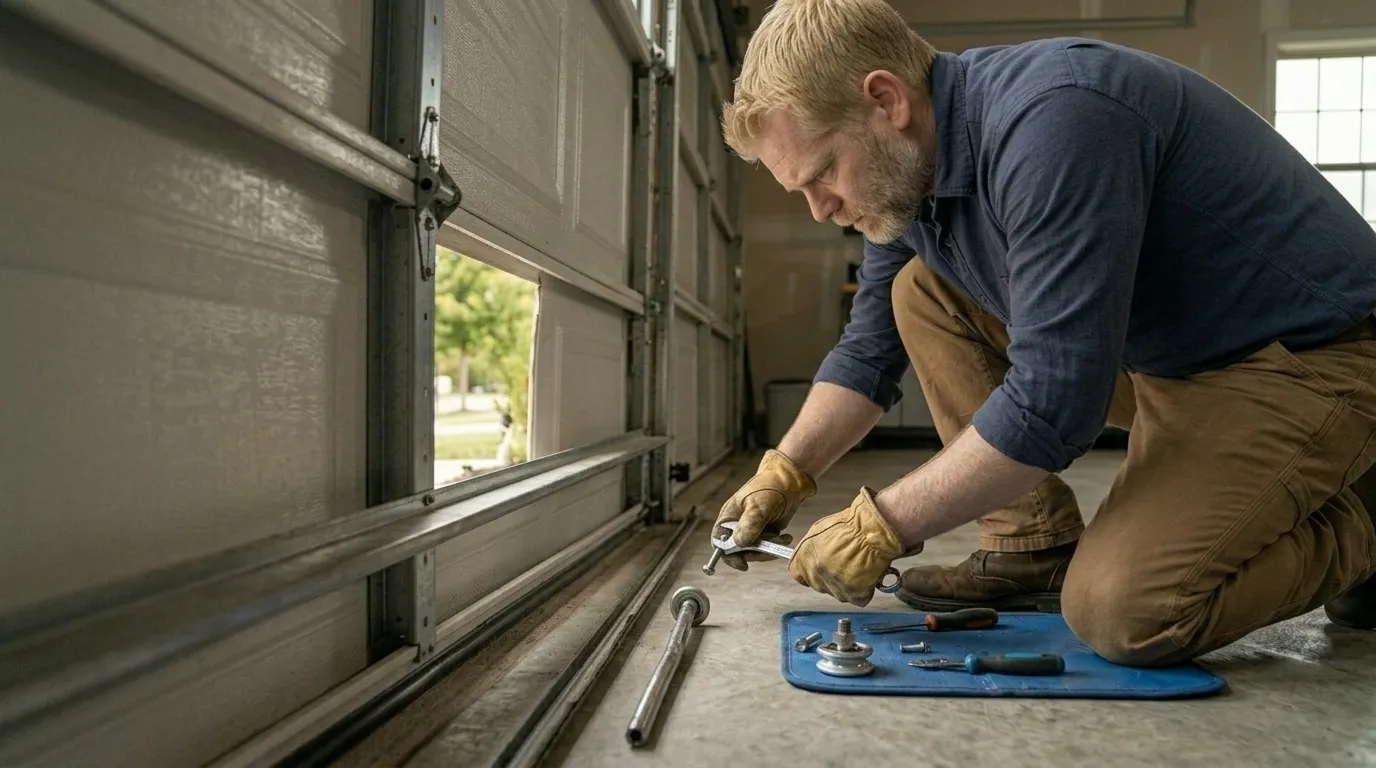
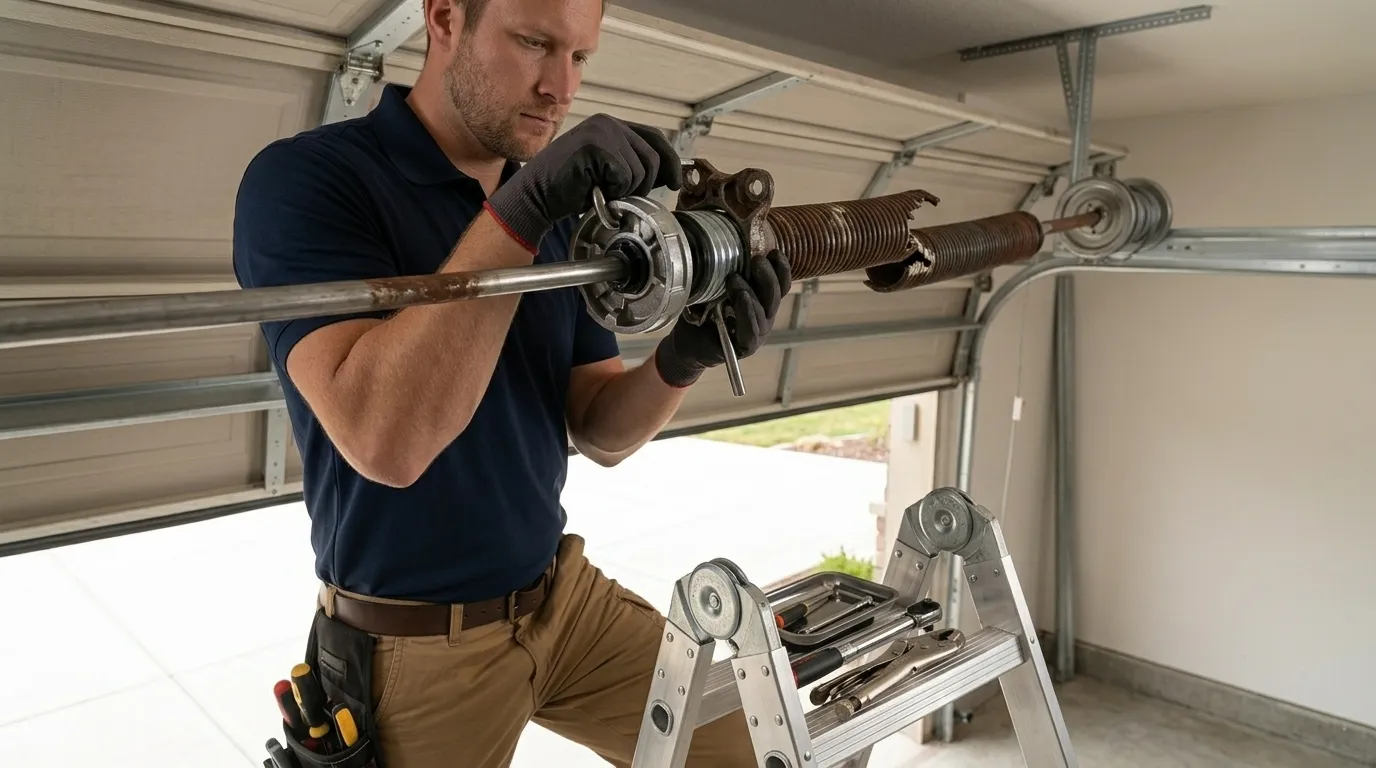
We start by checking whether the panel and cables are still square before touching the track - a door that's off-track but otherwise undamaged just needs the rollers walked back into the rail and the track bolts re-torqued. If a roller or bracket is worn, we replace it on the spot from stock we carry on the truck. Where the track itself is bent, we swap that section rather than trying to bend it back, since a repaired bend tends to fail again under the door's own weight. Once it's back on track, we run the door through several full cycles to make sure both sides travel evenly before we call the job done.
Questions
Usually one roller has worn out of its groove or a bottom bracket cable has stretched slightly, so that side of the door rides lower on the track than the other. On the wider double doors common in Eastvale, this shows up faster because more panel weight sits on that one rail than on a narrower single door.
A single bent spot in the track is usually a section swap, not a full door replacement. If the bend happened because the door was forced while off-track, we check the panel and bottom brackets too - if those are undamaged, the door itself doesn't need replacing, just the track hardware.
No, we run out of Corona, about 7 miles away, and travel to Eastvale for every job. We don't keep a depot or branch here, so booking means calling ahead rather than expecting a truck already in the area.
We'd rather you didn't. Forcing a door back onto a track it's jumped can bend the rail or tear a bottom bracket loose from the panel, turning a roller adjustment into a track and bracket replacement. It's a quick job for us with the right tools on the truck.
Explore more
Ready when you are
Corona Garage Door Pros repairs and installs garage doors, springs and openers in Corona, CA and the surrounding area.