
Warehouse access complication
Access is another factor - a door that's inside an active warehouse or retail bay means working around forklifts, staff, and delivery windows instead of an empty driveway.
Eastvale, Corona
Eastvale's commercial buildings are newer than most of the Corona service area. Our crew travels 7 miles out to handle the doors and openers that come with that.
Warning signs
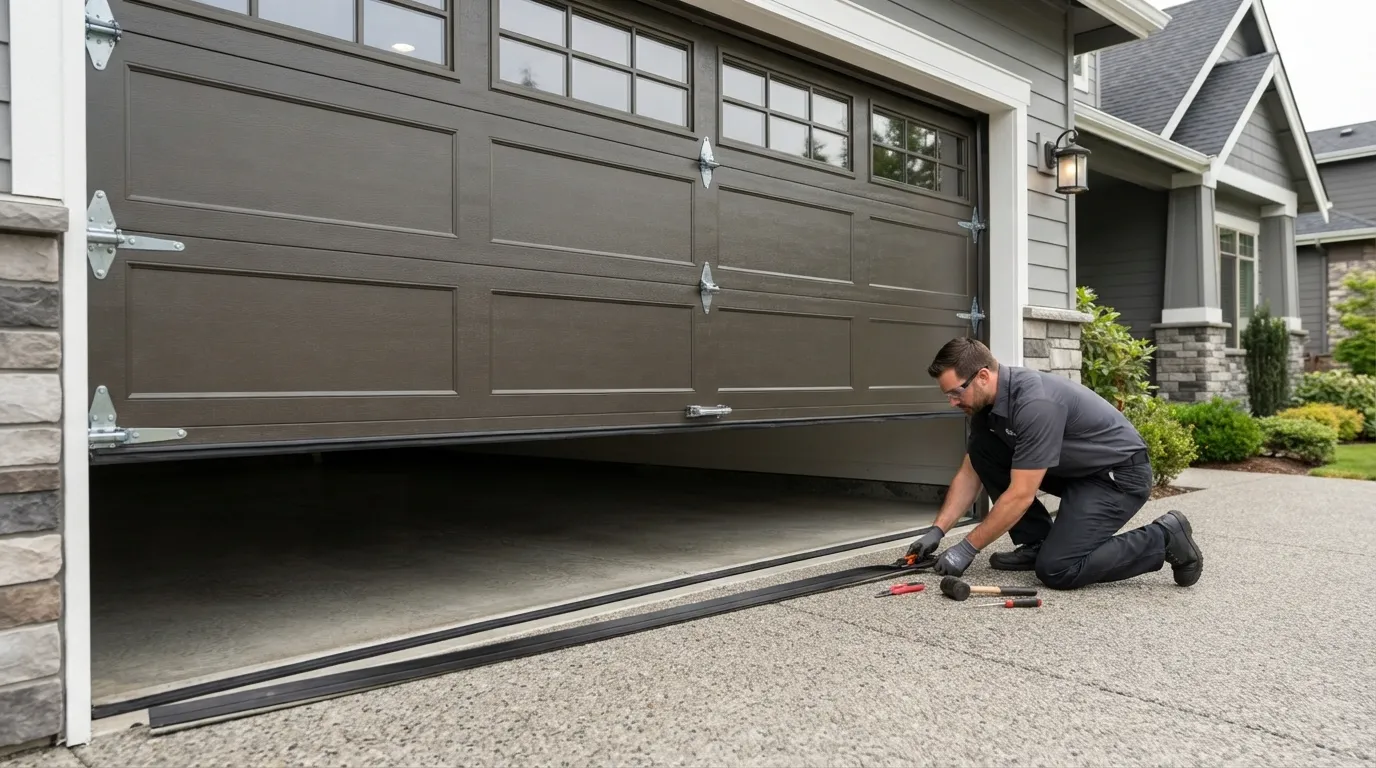
The complaint we get from Eastvale commercial accounts is rarely the tired torsion spring you'd expect on an older building. It's a drive gear stripped out on a heavy-cycle opener, a control board that's cooked itself from heat exposure, or a photo-eye sensor knocked out of alignment by a forklift or delivery cart. That's a different failure pattern than what shows up on the older side of the service area.
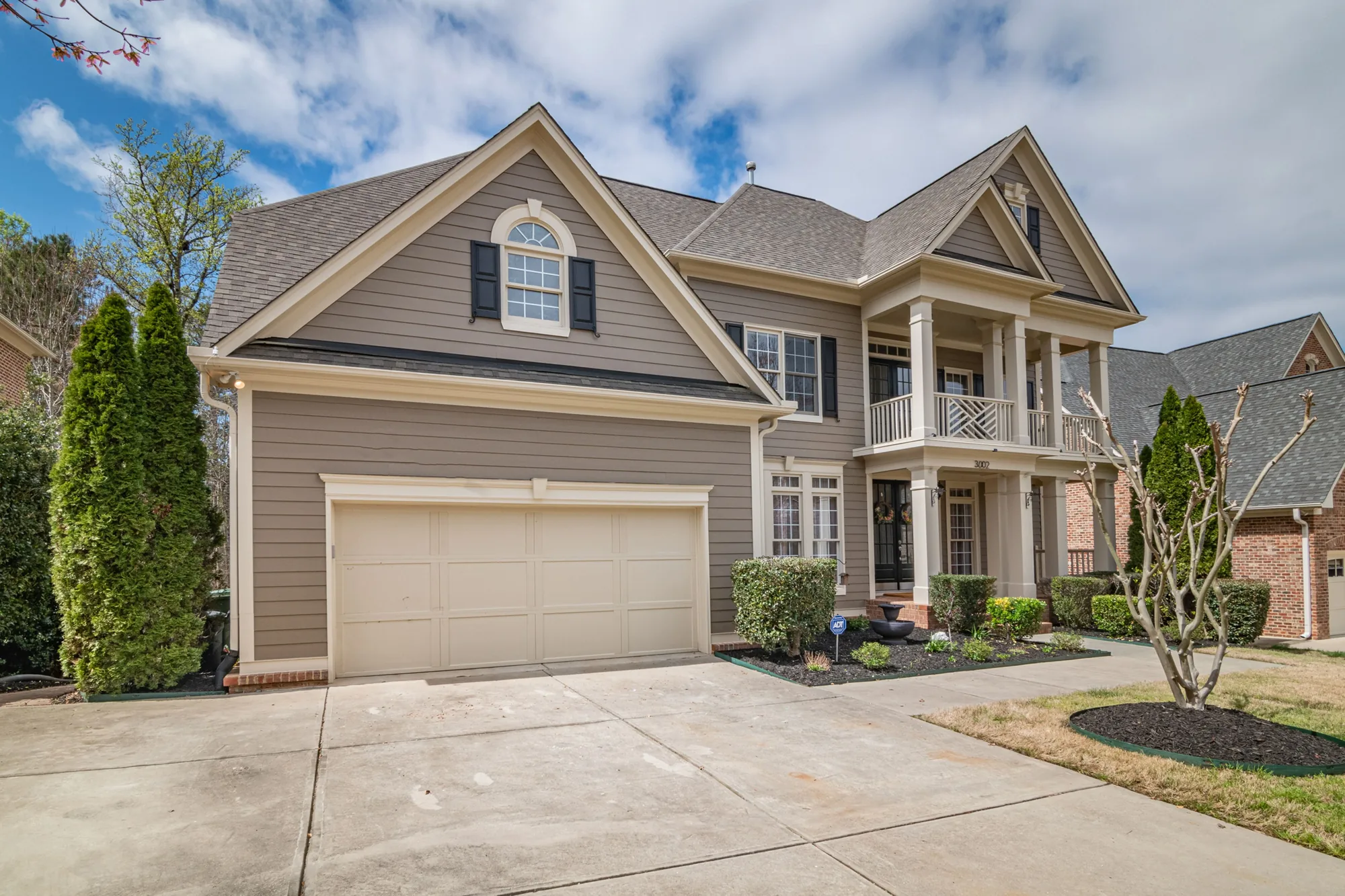
The reason is the building stock itself. Across the wider Corona service area, homes and commercial structures went up anywhere from 1938 to 2007, with a median around 1981 - a lot of aging hardware still in service. Eastvale's median year built sits at 2007, right at the tail end of that range. Most of what you're operating a door on here is newer steel sectional stock and newer commercial operators, not the original one-piece doors and worn out drums you find on 1960s and 70s buildings elsewhere. Newer doesn't mean trouble-free - it means the trouble is different: electronics, high-cycle wear, and factory settings that drift out of spec under repeated use.
Booking
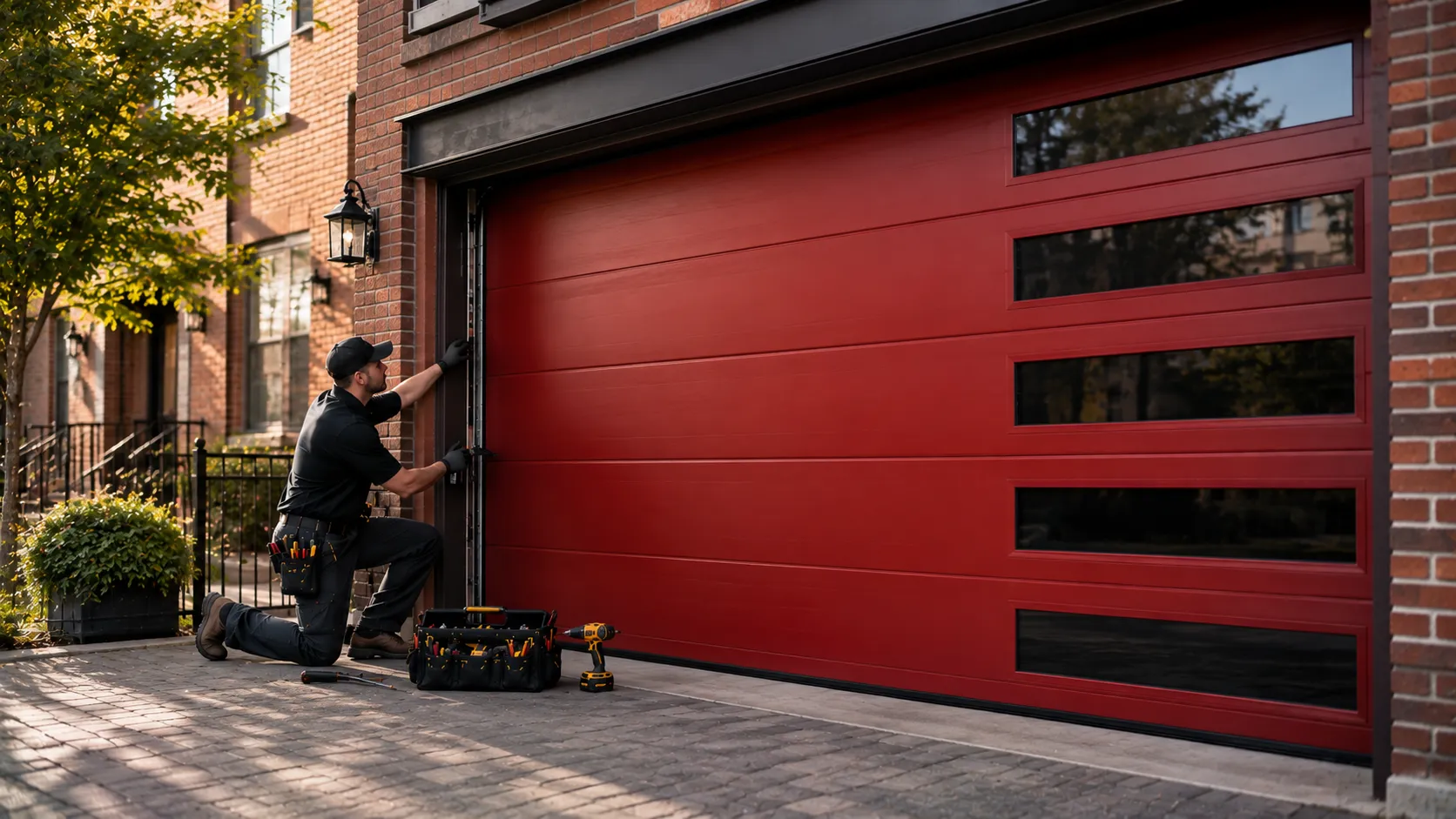
We run out of Corona, about 7 miles from Eastvale, so there's no local branch to swing by - everything starts with a call and a description of what the door is doing.
Bay doors that won't cycle, safety reversal that's stopped working, or an opener throwing an error code are the kind of thing we want to hear about up front so the truck rolls with the right parts.
Commercial accounts here tend to run tighter schedules than a residential garage, so we ask what hours the door actually needs to be down and work around that where the job allows it.
We don't promise a same-day slot on this page, because that depends on what's already on the truck that day - but we do ask enough on the phone to know whether we're bringing a full opener replacement or just a sensor kit. You can see where Eastvale sits in our coverage area at /coverage/eastvale/.
Local causes
Two things drive most of the calls we get from this side of the service area. First, the heat. The climate band here runs moderate on heat exposure, and commercial operators mounted near metal roofing or in unshaded bays take the brunt of it - capacitors and control boards fail early, and belts and chains stretch faster than the manual says they should. Second, cycle count. A commercial bay door on a newer 2007-era building is built to handle regular traffic, but 'regular' in a busy operation can mean several times the cycles a manufacturer rated it for, and that shows up first in the gear train and the rollers, not the spring.
Eastvale's median household income runs well above the wider Corona service area's $108,588, and higher-spec buildings tend to come with higher-spec doors - more automation, more sensors, more things that can drift out of calibration. That's not a complaint, it's just what we bring the right parts kit for.
Timing
A sensor realignment or a gear replacement on a standard commercial opener is usually a same-visit fix once we're on site. A full opener swap or a damaged panel on a wider commercial door takes longer, mostly because commercial-grade panels and heavy-duty track hardware aren't something we keep three of on the truck at all times - if the part isn't a common one, there's a lead time on ordering it in.
We'll tell you on the phone or at the door which category your job falls into. We won't guess at a timeline before we've looked at the door, and we won't quote a repair time that depends on a part we haven't confirmed is in stock. That's the honest limit of what we can promise before we're standing in front of the operator.
Watch-outs
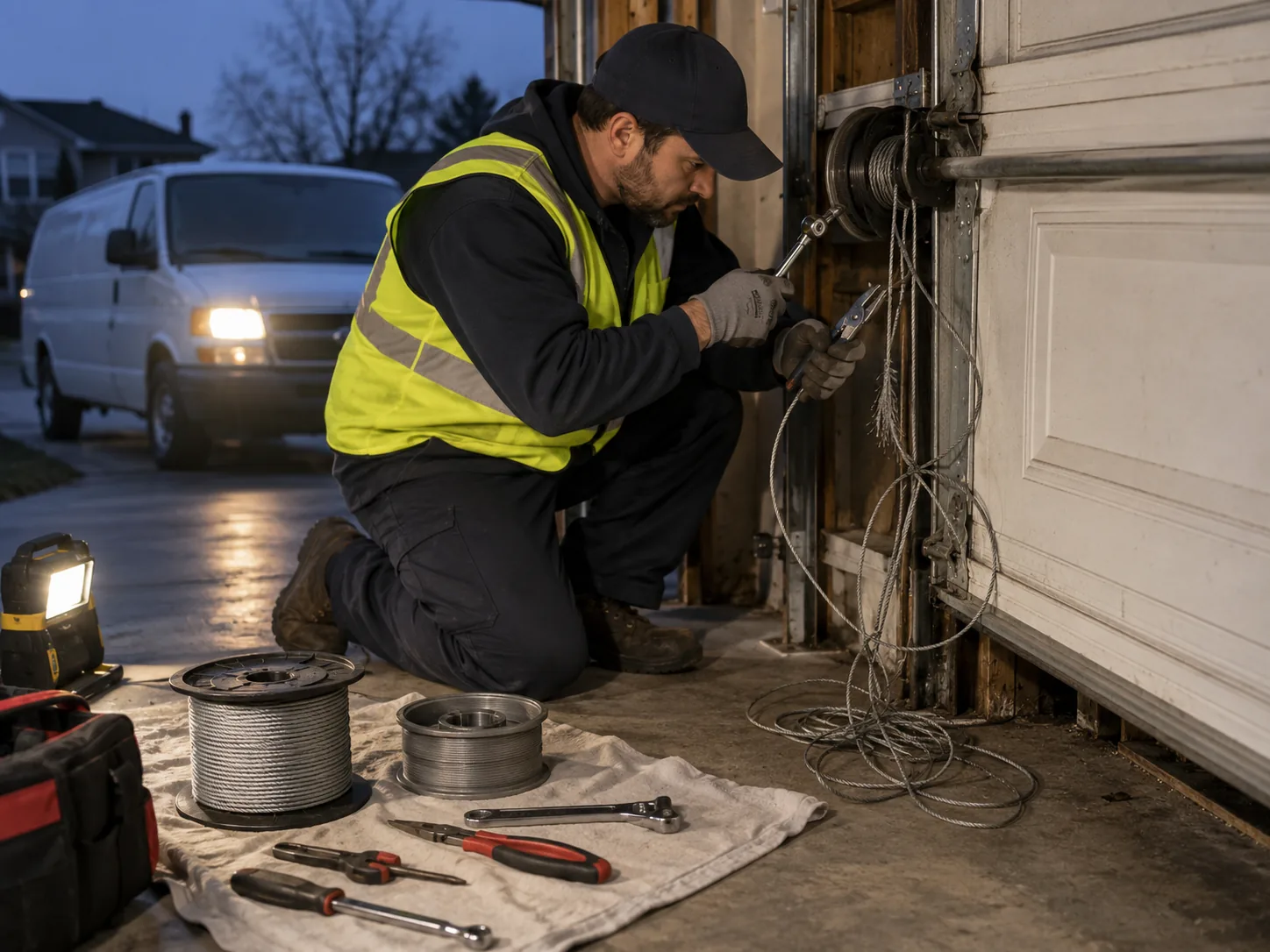
Commercial bays complicate a repair in ways a residential garage door doesn't. Loading dock doors are often wider and heavier, which means the torsion system carries more load and a spring failure is a bigger, riskier job than the two-car residential doors we work on elsewhere.
Access is another factor - a door that's inside an active warehouse or retail bay means working around forklifts, staff, and delivery windows instead of an empty driveway.
Because a lot of Eastvale's commercial stock is newer, we also run into openers still tied to manufacturer specs that call for matched replacement parts rather than universal ones.
That can mean waiting on a specific part number instead of grabbing something generic off the truck. It's a fair trade for the newer hardware being more reliable day to day, but it's worth knowing before you're staring at a down door mid-shift.
Our process
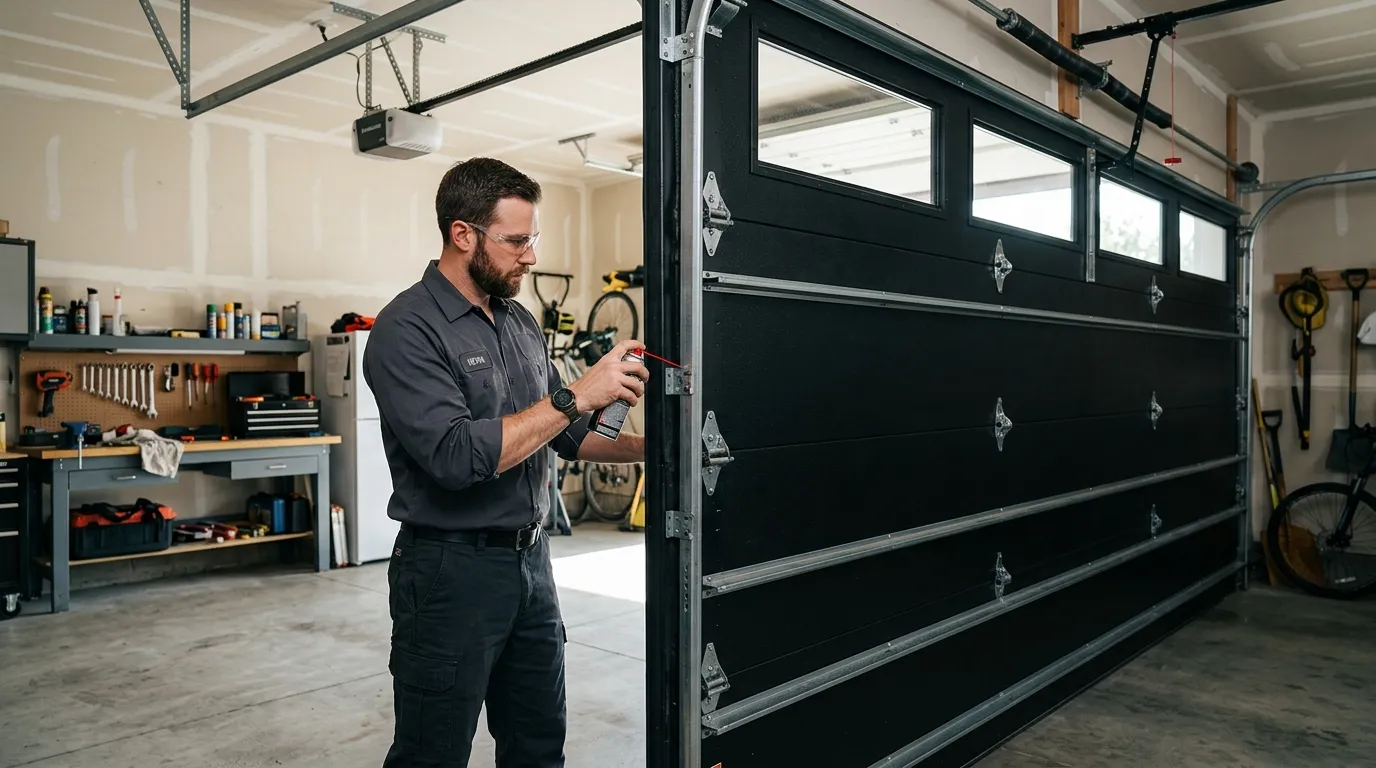
We start by running the door through a full cycle to watch where it hesitates, binds, or throws a fault, rather than replacing parts on a guess. On newer commercial operators, that often means checking the board's error log before anything gets swapped out - it usually tells you more than the noise the door is making.
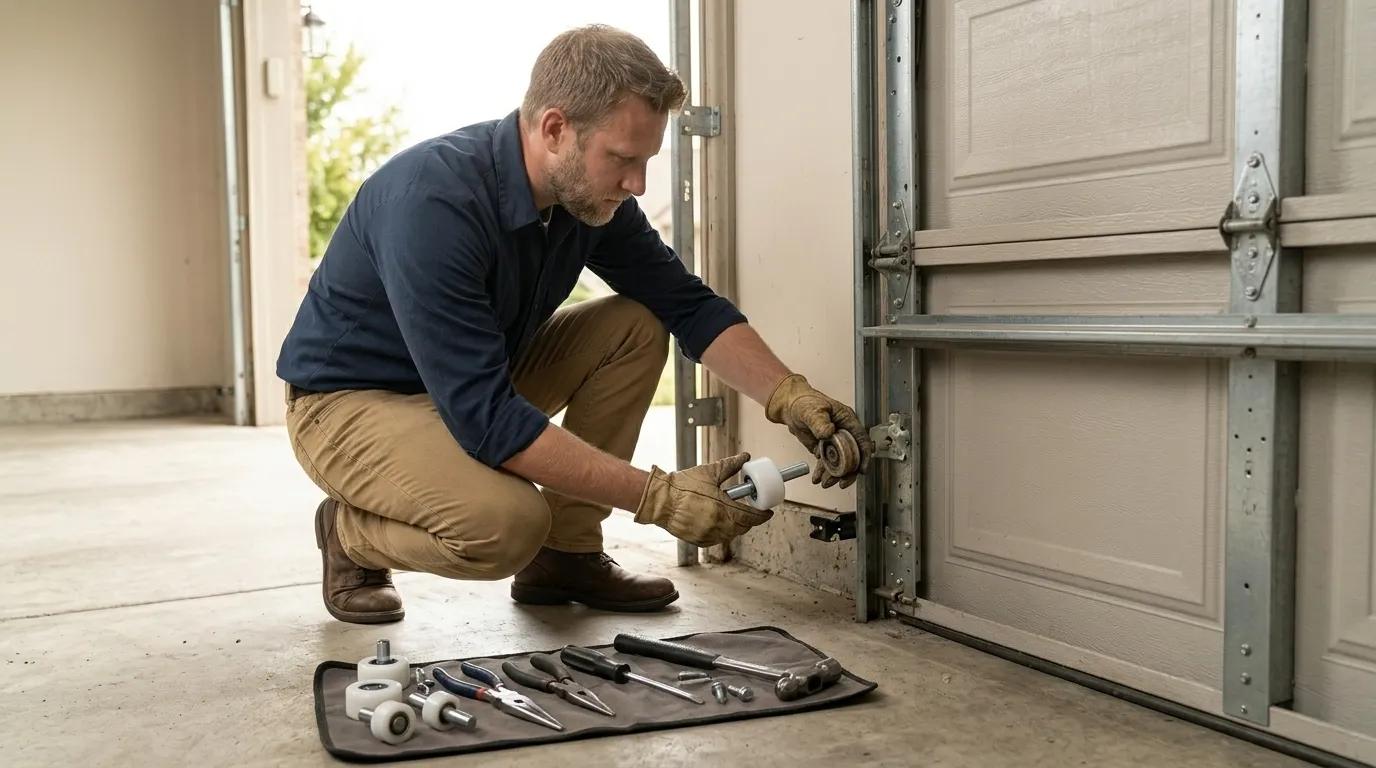
From there it's either a targeted repair - sensor, gear, roller, cable - or, if the opener's original electronics are failing across the board, a full replacement sized to the door's actual cycle load rather than a stock residential unit. We size commercial replacements to the traffic the door sees, not to what came stock from the builder in 2007. If you want the fuller rundown of what we handle out of Corona beyond this one service, that's covered at /commercial-garage-door-corona-ca.
Questions
No. We run out of Corona, about 7 miles away, and dispatch from there for every Eastvale call. There's no local yard here, so parts and stock come on the truck with the technician rather than from a nearby depot.
Eastvale's median year built is 2007, well past the median of 1981 across the wider service area. Newer buildings mostly have newer steel sectional doors and newer operators, so failures tend to show up in electronics, sensors, and gear trains rather than in worn-out springs or original one-piece doors.
We don't quote a timeline before we've heard what the door is doing and confirmed what's already on the truck. A sensor or gear job is usually handled in one visit; a part that isn't commonly stocked can add a lead time we won't guess at over the phone.
Yes. The climate band for this area runs moderate on heat, and control boards and belts mounted in unshaded bays or near metal roofing tend to fail or stretch earlier than the manufacturer's rated life. It's one of the more common causes we see on service calls in this area.
Explore more
Ready when you are
Corona Garage Door Pros repairs and installs garage doors, springs and openers in Corona, CA and the surrounding area.