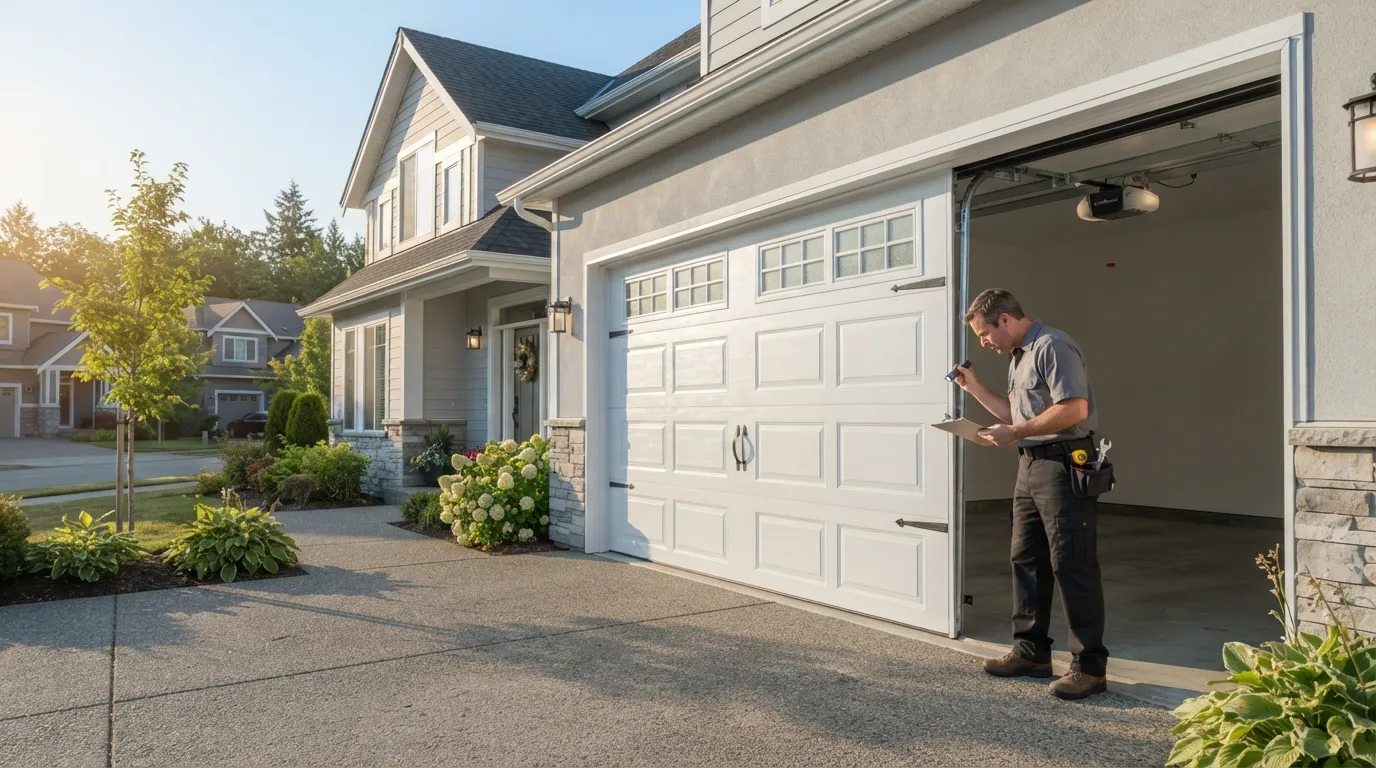
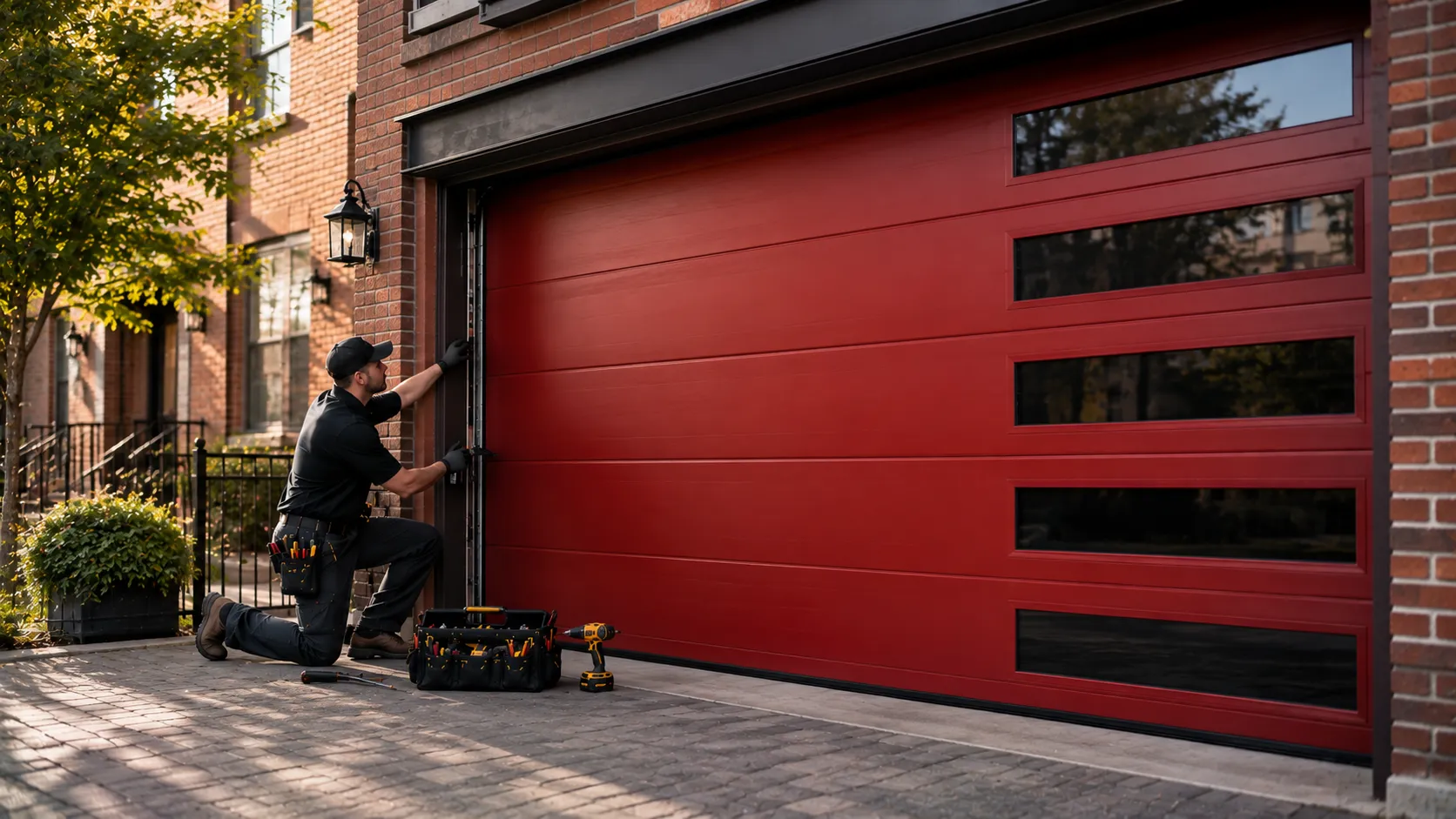
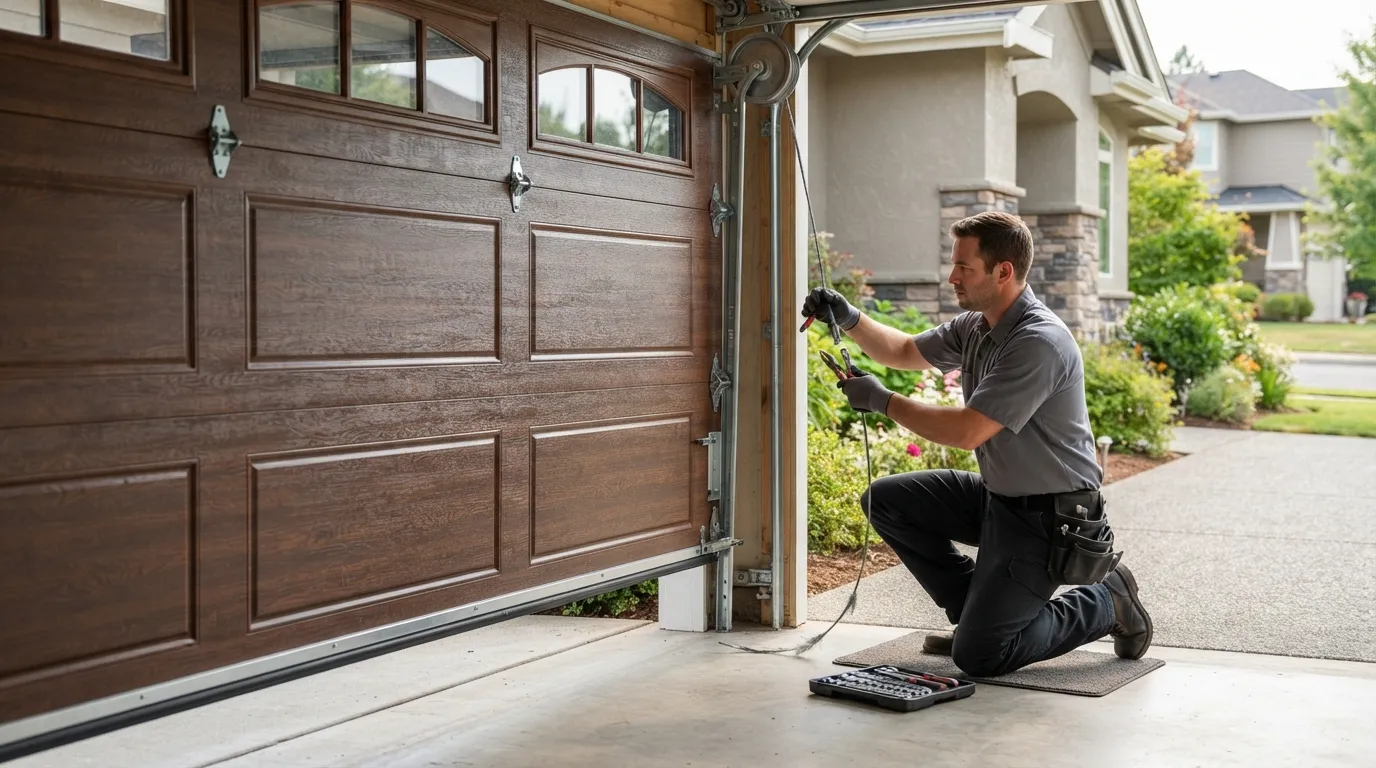
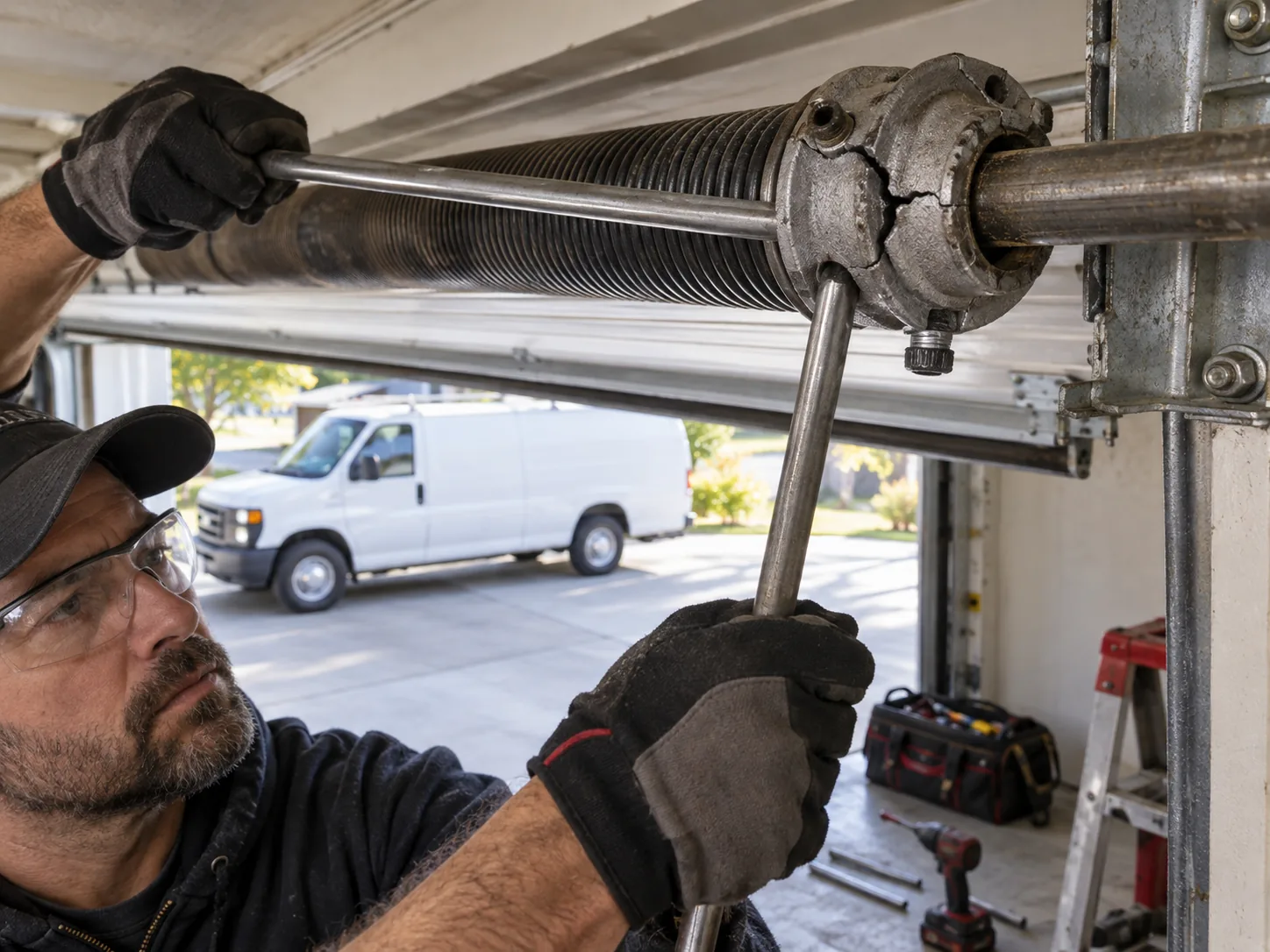
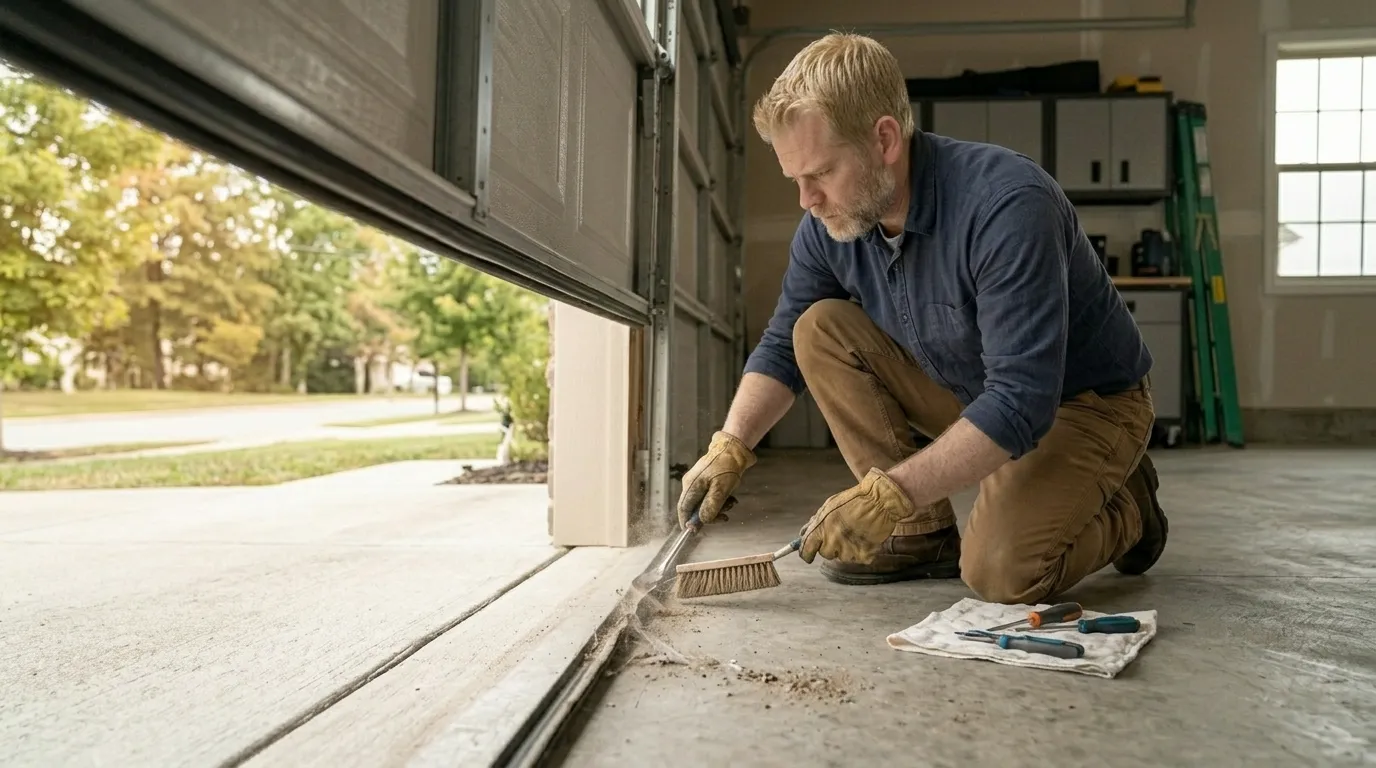
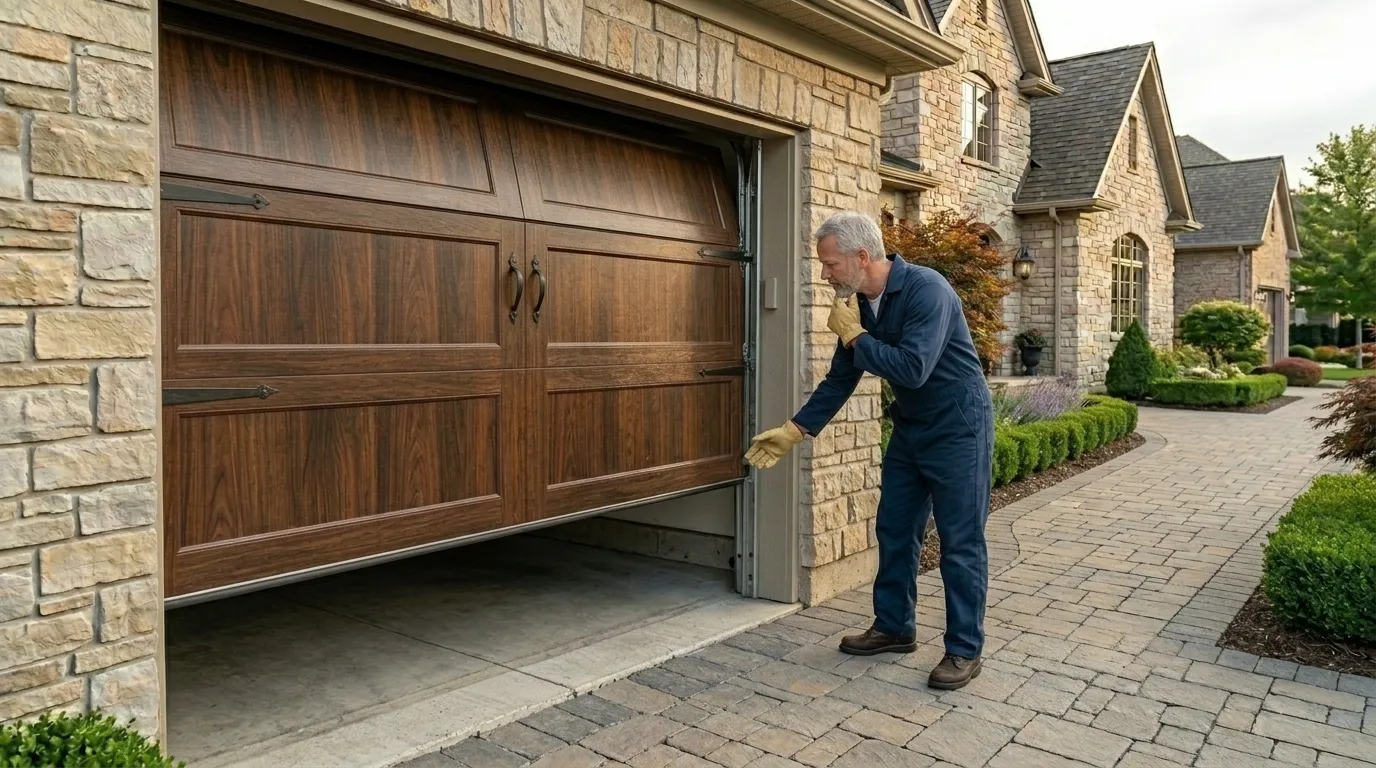
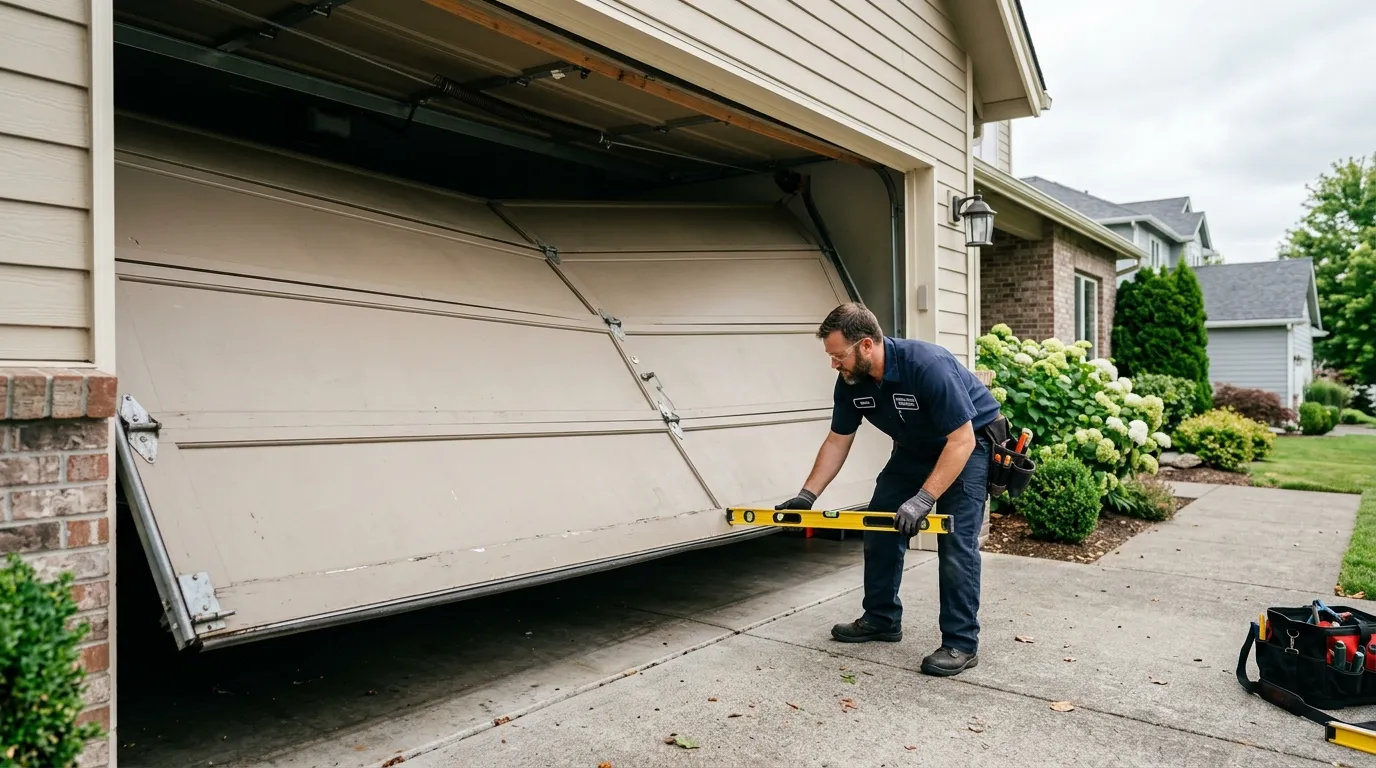
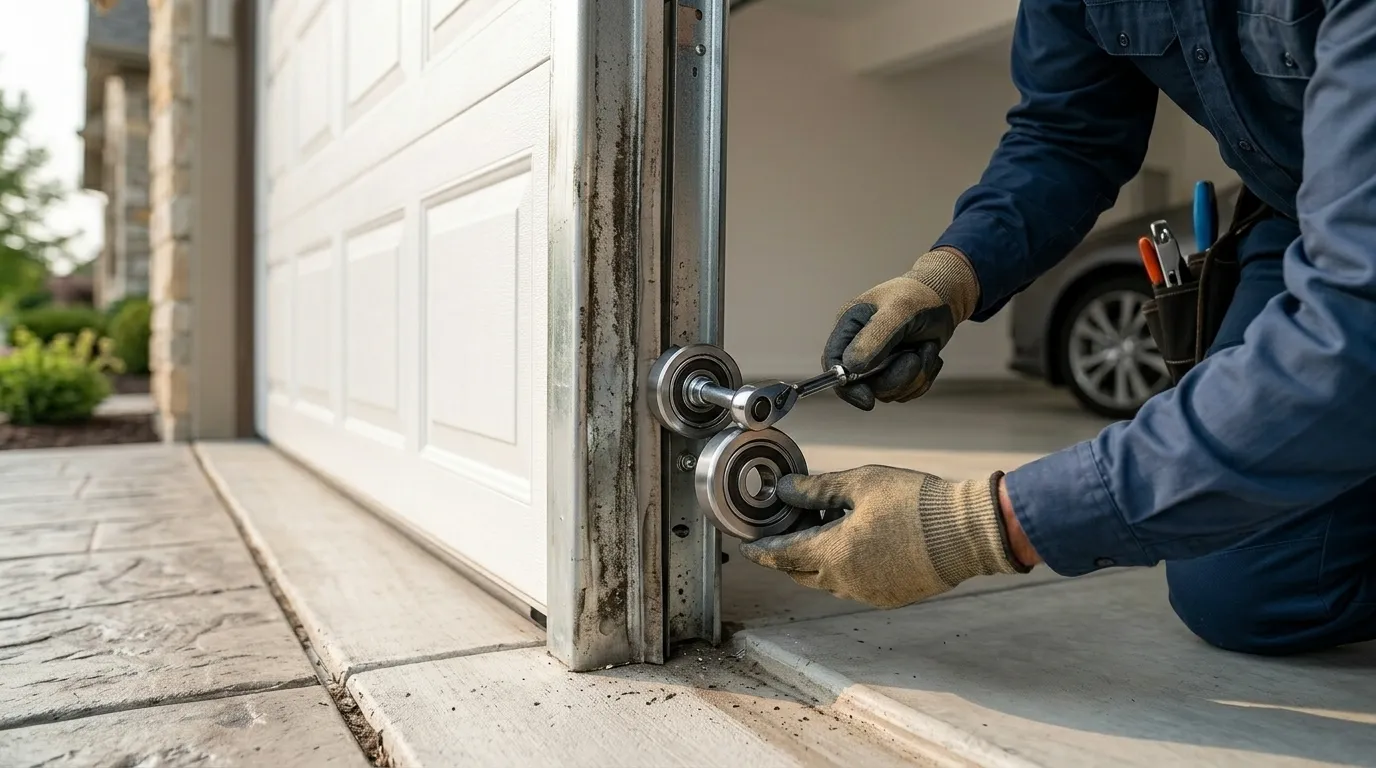
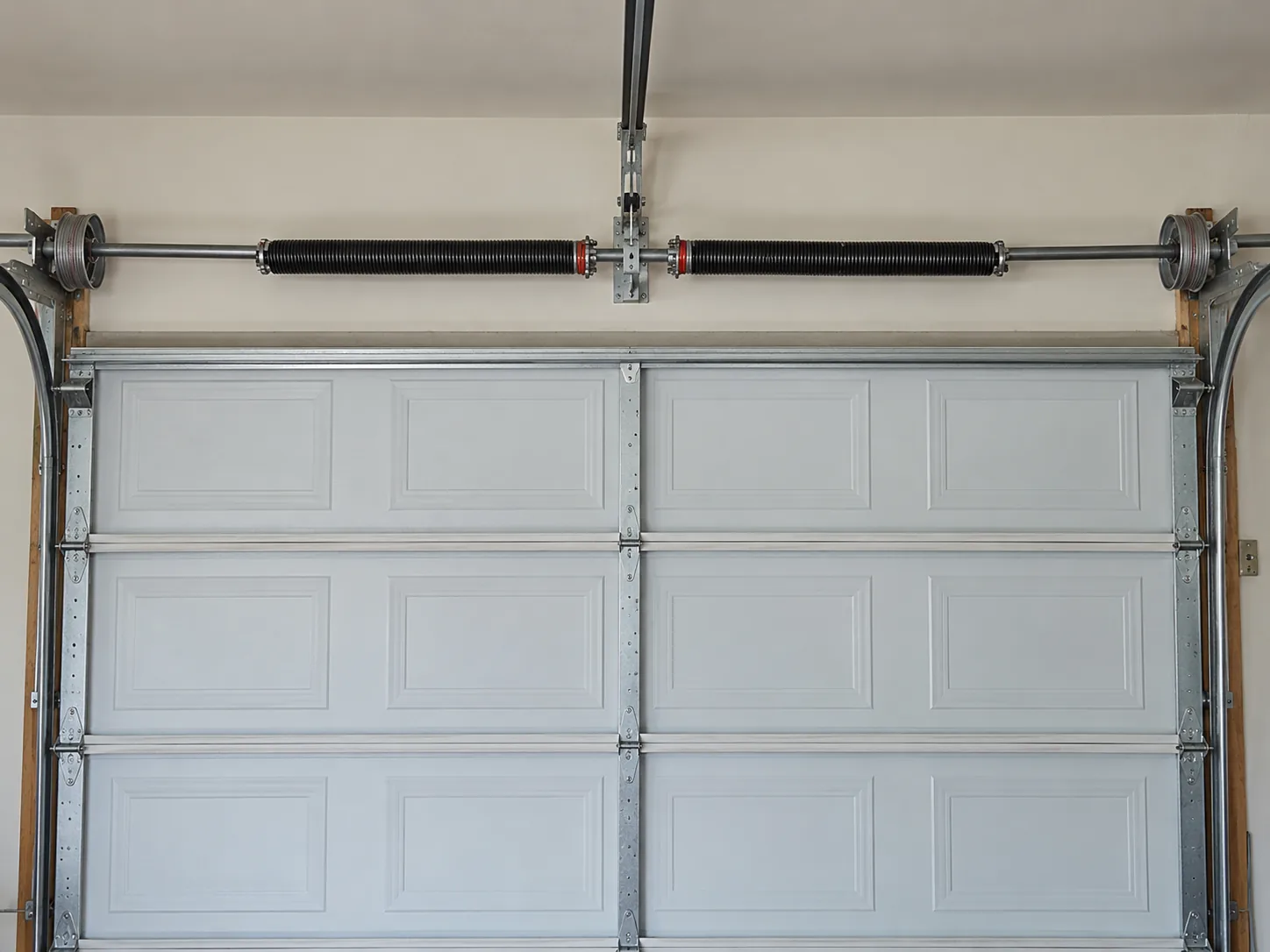
On a house built around 1990, the door you're replacing is likely the original builder-grade steel panel, or a first replacement put in sometime in the 2000s. After three decades, the symptoms are predictable: rollers grinding in the track, a bottom panel that's started to bow on a wide double door, or an opener straining because the door's gotten heavier to lift as the springs lose tension. Since this area sits in a moderate heat band, we don't see the extreme panel warping that shows up in harsher climates, but a non-insulated steel door from that era still transfers a fair amount of heat into an attached garage on a hot afternoon, which is part of why insulated replacements come up so often in these conversations. If the track is bent from years of a slightly-off door, or the double-door center post shows rust at the base, those are usually signs the whole assembly, not just the panel, needs to come out rather than get patched.